Mechanism
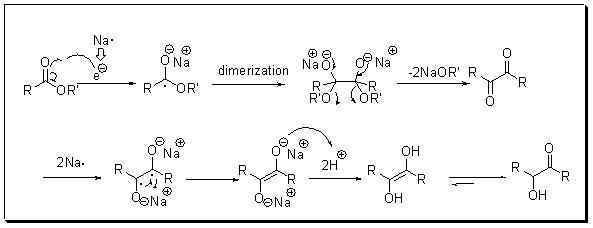
The reaction is initiated by electron transfer from sodium to the carbonyl group of the ester. The resulting radicals dimerize and the alkoxides are eliminated. The diketone further reacts with sodium to give disodium derivative which reacts with acid to give acyloin.
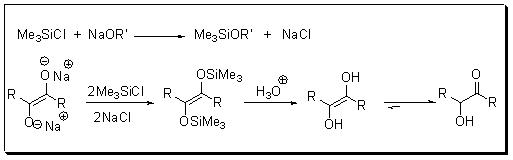
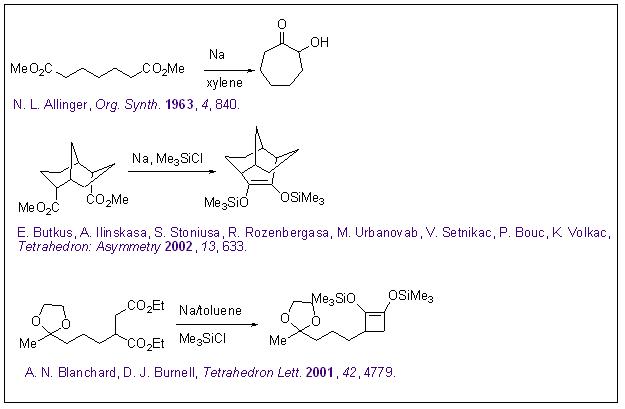
The alkoxide generated during the reaction can catalyze condensation of the ester. To prevent this competitive reaction, the alkoxides are trapped using chlorotrimethylsilane and the acyloin is then released with acid. This procedure gives better results compared to the traditional Dieckmann cyclization for preparation of larger rings.