4. Soil formation and properties:
(1) parent material --The material from which the soil is formed. Soil parent material could be bedrock, organic material, or a deposit from water, wind, glaciers, volcanoes, or material moving down a slope.
(2) climate -- Heat, rain, ice, snow, wind, sunshine, and other environmental forces break down the parent material and affect how fast or slow soil processes go.
(3) organisms -- All plants and animals living in or on the soil (including micro- organisms and humans!).
(4) topography -- The location of a soil on a landscape can affect how the climatic processes impact it. Soils at the bottom of a hill will get more water than soils on the slopes, and soils on the slopes that directly face the sun will be drier than soils on slopes that do not.
(5) time -- All of the above factors assert themselves over time, often hundreds or thousands of years.
5. Soil Profiles
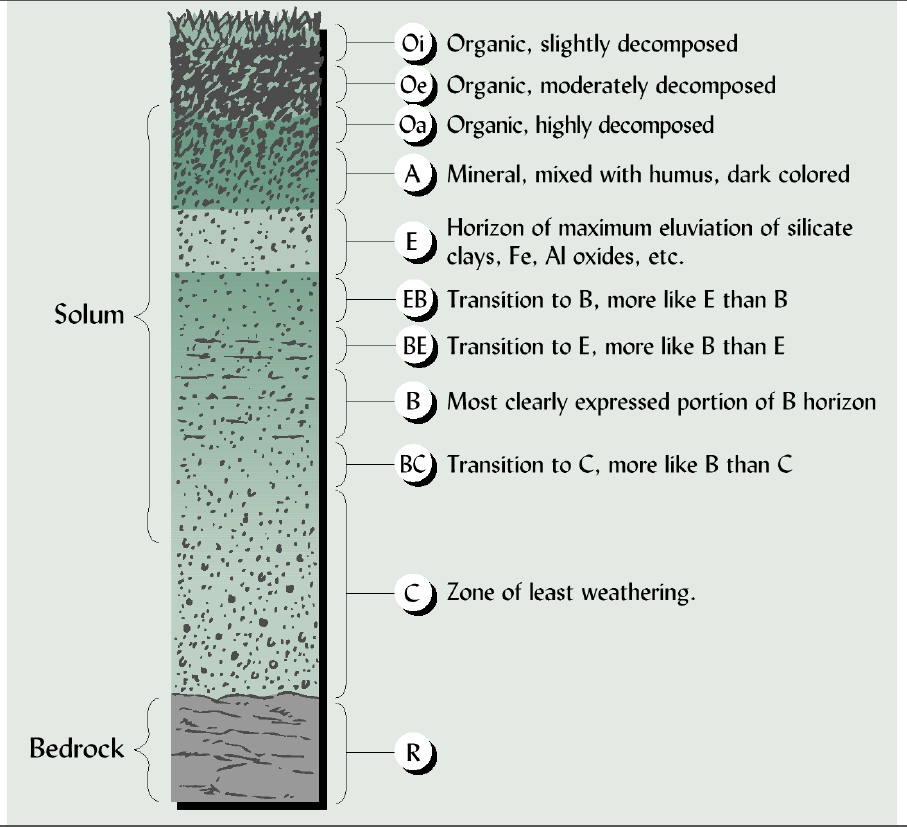
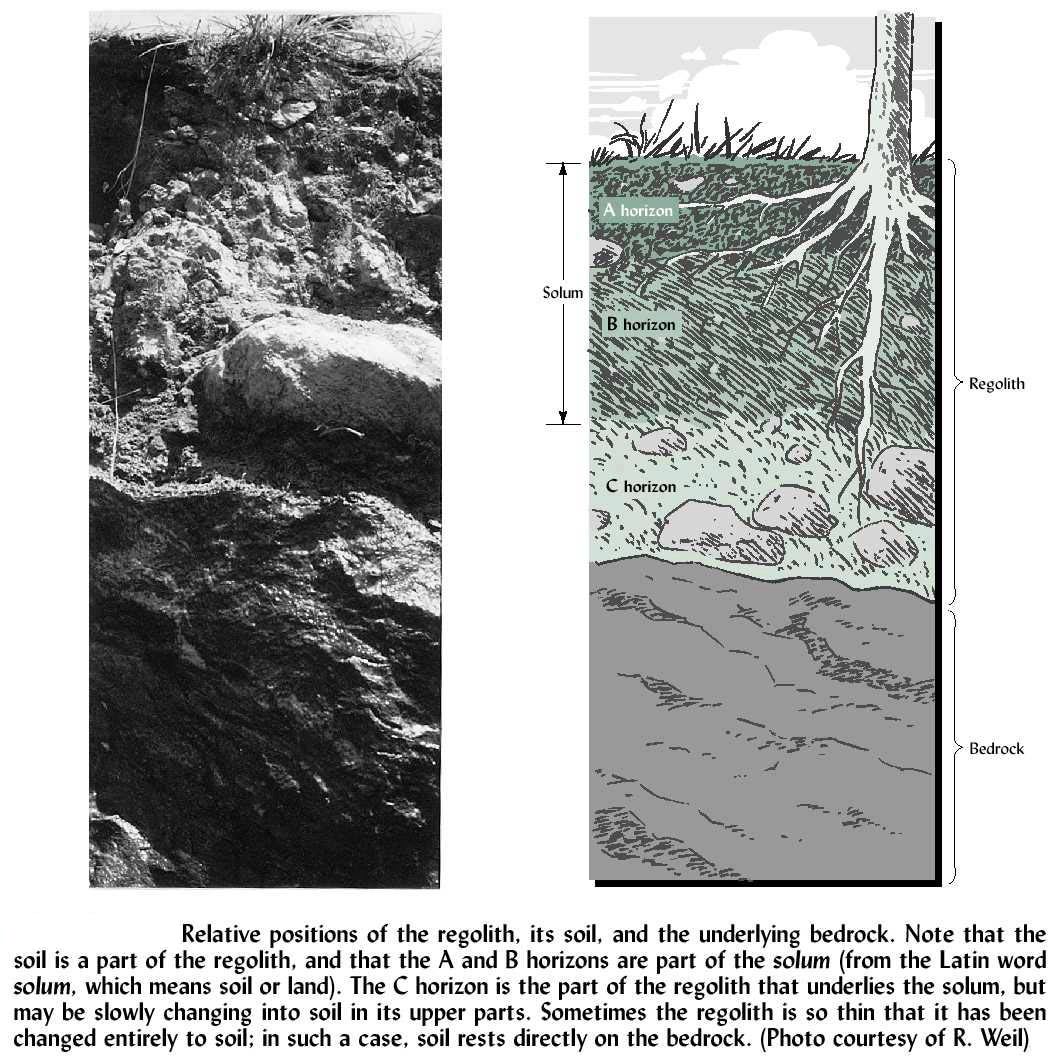
The face of a soil, or the way it looks if you cut a section of it out of the ground, is called a soil profile. The profile can tell you about the geology and climate history of the landscape over thousands of years, the archeological history of how humans used the soil, what the soil's properties are today, and the best way to use the soil.
Every soil profile is made up of layers called soil horizons. Soil horizons can be as thin as a few millimeters or thicker than a meter.