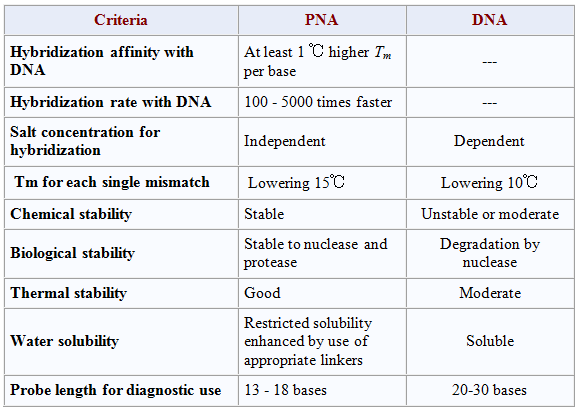
4.21.3. Comparison of PNA and DNA
4.21.4. Application of PNA
- miRNA Inhibitors: PNA has stronger binding affinity to its complementary RNA than to DNA as DNA does. This principle can be exactly applied to miRNA to inhibit its activity. This has been experimentally proved.
- Bio-drugs for Antigene and Antisense therapy: The stronger binding properties and biological stability of PNA imply that a small quantity of PNA can be effective for therapeutic applications. Triplex invasion of a PNA shows good potential as antigene material. As a third generation molecule in antisense therapy, there has been experimental data that shows good effect in vitro and in vivo.
- Molecular tools for molecular biology and functional genomics: PNA is used as tools of molecular biology and functional genomics research. PNAs can be used in many of the applications where traditional synthetic DNA or RNA have been used, but with the added benefits of tighter binding, greater specificity and stability.
- Molecular probes for diagnostics and detection: Binding properties of PNA give more specific, more sensitive, and more accurate result for the detection of target sequences. Some of the commercialized PNA products available on the market are probes that detect genetic disease and or detect viral or bacterial infections.
- SNP detection: PNA probe can be used for SNP detection.
- Biosensor: PNA probe are also used for nucleic acid biosensor
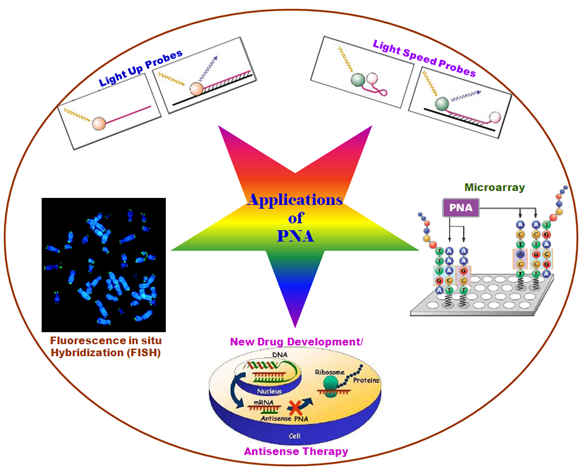
Figure 4.54: Schematic presentation of different applications of PNA.