4.21. Basics of Peptide Nucleic Acids
4.21.1. Introduction
Peptide Nucleic Acid (PNA) an artificially created DNA analogue was invented by Dr. Nielsen, Egholm, Berg, and Buchardt in 1991. The phosphate ribose ring of DNA was replaced with the polyamide backbone in PNA. Despite a radical structural change, PNA is capable of sequence-specific binding in a helix form to its complementary DNA or RNA sequence. Due to its superior binding affinity and chemical/biological stability, PNA has been widely applied in the field of biology.
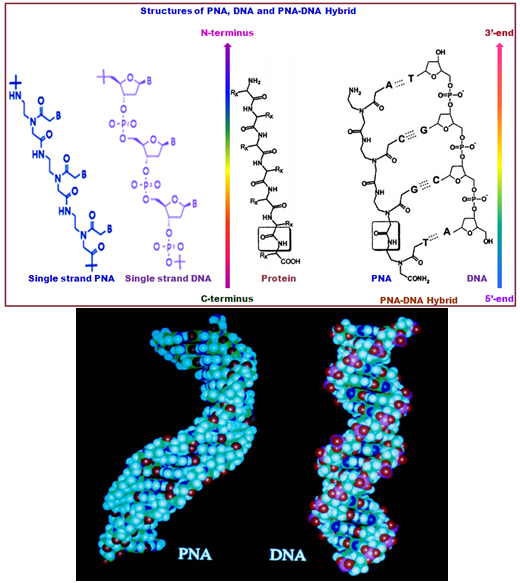
Figure 4.53: The Structures of PNA, DNA, and Protein.
4.21.2. Main Features of PNA
The main features of PNA are:
- High binding affinity to its complementary DNA or RNA
- Differentiation of sing-base mismatch by high destabilizing effect
- High chemical stability to temperature and pH
- High biological stability to nuclease and protease
- Salt independence during hybridization with DNA sequence
- Triplex formation with continuous homopurine DNA
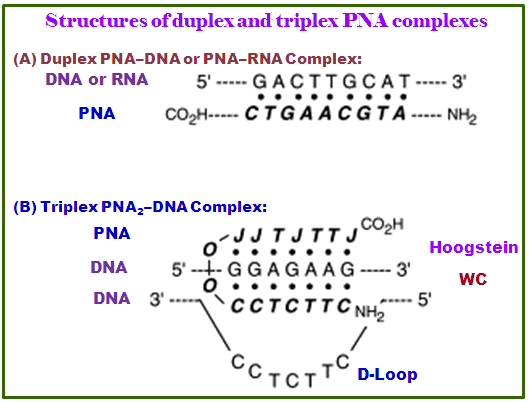
Figure 4.54: PNA binding modes for targeting double stranded DNA.