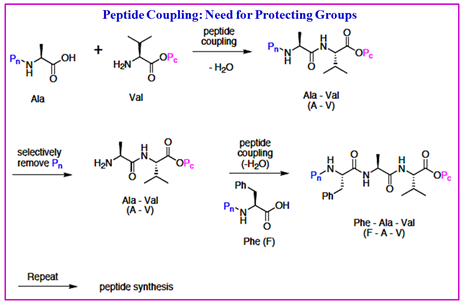
2.3.4. Peptide Coupling: Need for Protecting Groups
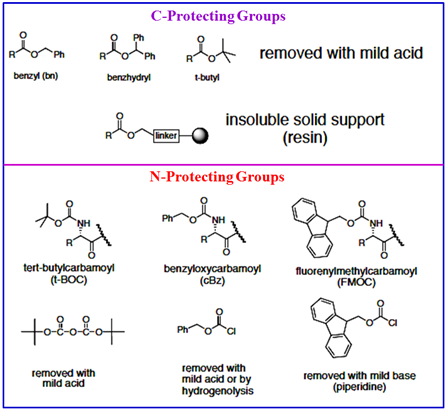
2.3.5. The Protecting Groups
2.3.6. Solid-Phase Peptide Synthesis (SPPS)
- Peptides up to ~ 100 amino acids can be synthesized in a laboratory
- Laboratory synthesis is from the C-terminus to the N-terminus
- Nature synthesizes peptides from N to C.
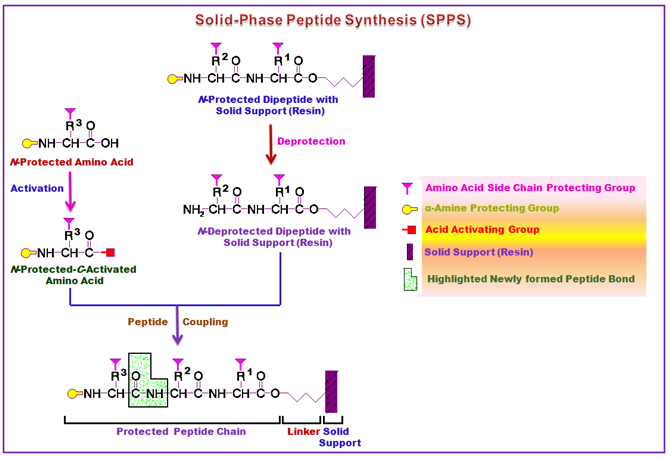
Figure 2.13: Solid phase peptide synthesis protocol
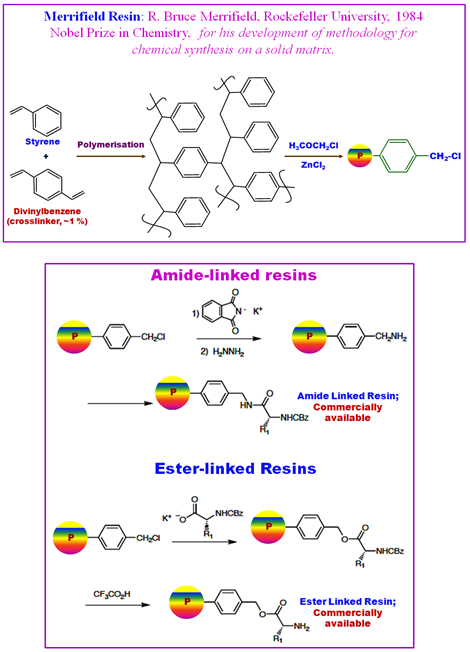
2.3.6. A. Solid-Phase Peptide Synthesis: The solid Support
- Can be functionalised;
- Chemical stability (it must be inert to all applied chemicals);
- Mechanical stability (it shouldn’t brake under stirring);
- It must swell extensively in the solvents used for the synthesis;
- Peptide-resin bond should be stable during the synthesis;
- Peptide-resin bond can be cleaved effectively at the end of the synthesis;
- The basic of the most common used resins is polystyrene-1,4-divinylbenzene (1-2%) copolymer