1.11 Analogy Between Biochemical and Organic Reaction
1.11.1. Introduction
The nature’s synthesis of complex biological molecules, like proteins, DNA with the help of several enzymes and coenzymes can be correlated with organic synthesis in laboratory. However, Nature’s enzymatic synthesis is differed from simple organic chemistry by its degree of complexities and a higher degree of stereoregularity and stereospecificity. It is for that reason why some biological transformations are not easily carried out in test tube in chemistry laboratory. Coenzyme biochemistry often leads to unconventional organic chemistry. In this respect, coenzymes are nature’s special reagents. Their well defined chemical structures make them ideal molecules to use for developing the concept of structure-function relationships by bioorganic chemistry approaches as is discussed earlier under biomimetic chemistry section.
1.11.1. Catabolic Processes-Analogy with Organic Chemistry
As an elaborative example, we discussed here the Metabolism reaction in biology and the analogous reactions in Organic Chemistry. In catabolic processes break down and oxidation of larger molecules to produce smaller molecules and energy is take place. The first, beta-oxidation, is a key part of the process by which fatty acids are broken down to acetate.
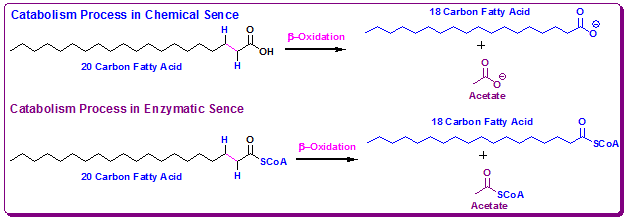
Figure 1.38: The catabolic process and the analogous organic reaction.
From this we can see that the outcome of a beta-oxidation event is that two carbon atoms are cleaved from a fatty acid. The bond broken is between the alpha and beta carbons. The gamma carbon shows up in the product as a carboxylic acid. This carboxylic acid, two carbons shorter than its parent, can be shortened by another trip through the beta-oxidation process, with the production of another molecule of acetate and a new fatty acid, again two carbons shorter.
Below is the full mechanistic path of the catabolism process. Thus, prior to the commencement of the actual beta-oxidation cycle, the carboxylic acid end of the fatty acid is esterified with the SH group of coenzyme-A.
The first reaction results in the removal of hydrogen atoms from the alpha and beta carbon atoms. Its effects are opposite to those of hydrogenation of a double bond. The removal of hydrogen atoms makes this reaction as an oxidation reaction similar to organic chemistry. The oxidizing agent here, in biology, is FAD (flavine adenine dinucleotide).
Next, water is added to the alkene π-bond which results from the first reaction. This is analogous to the addition of water to alkenes, a popular addition reaction in organic chemistry. Since we know that a carbon alpha to a carbonyl group is a rather nuclophilic place similar to the enolate organic chemistry, it makes sense that the electrophilic hydrogen from water would add there and the nucleophilic -OH would add at the beta carbon.
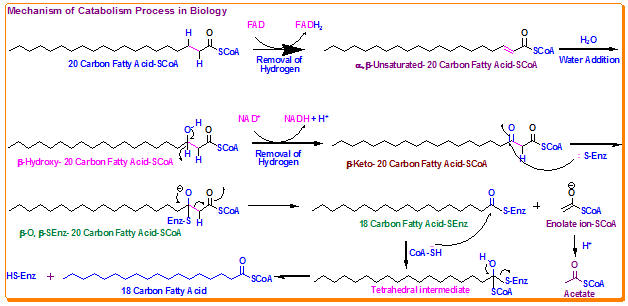
Figure 1.39: Full mechanism of catabolic process to show analogy with organic reaction.