6.7 Fluidized catalytic cracking reactor (FCCR) : (Figure 6.3)
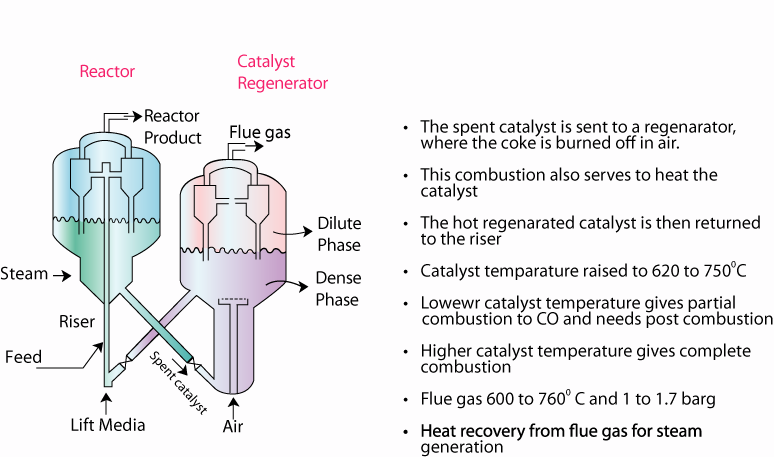
Figure6.3 Fluidized Catalytic Cracking Reactor ..........................
- • The basic principle of the FCCR is to enable the fluidization of catalyst particles in the feed stream at desired pressure and temperature.
• Another issue for the FCCR is also to regenerate the catalyst by burning off the coke in air.
• Therefore, the reactor unit should have basically two units namely a reactor (FCCR) and a catalyst regenerator (CR).
• The FCCR consists essentially of two important components in a sophisticated arrangement. These are the riser and the cyclone unit assembled in a reactor vessel.
• Riser: In the riser (a long tube), the feed is allowed to get in contact with the hot catalyst. The hot catalyst is enabled to rise through lift media in the riser. The lift media is usually steam or light hydrocarbon gas.
• The riser contact time is about 250 milliseconds.
• The riser is eventually connected to cyclone units.
• The cyclone units receive the catalyst and finished product. The catalyst that enters the cyclone unit is fully coked and needs to be sent to a regenerator to regain its lost activity.
• After cyclone operation (which separates the hydrocarbon vapors and catalyst as a solid fluid operation), the catalyst falls down to the vessel that houses the riser and cyclone units.
• The catalyst in the vessel is subjected to stream stripping in which direct contact with steam is allowed to remove hydrocarbons from the catalyst surface.
6.8 Catalyst regenerator (CR)
- • The spent catalyst which is relatively cold enters the regenerator unit.
• Here air enters the vessel through a sparger set up.
• The catalyst is subsequently burnt in the air. This enables both heating the catalyst (which is required to carry out the endothermic reaction) and removing the coke so as to regain the activity of the coke.
• The catalyst + air after this operation will enter the cyclone separator unit. Unlike the FCCR, the CR does not have a riser. Therefore, air enters a dense phase of catalyst and also enables the movement of the catalyst to a dilute phase of catalyst + air
• The cyclone separators separate the flue gas and catalyst as a solid fluid operation.
• The activity regained catalyst is sent to the riser through a pipe.
• During this entire operation, the catalyst temperature is increased to 620 – 750°C
• The flue gas is obtained at 600 - 760°C and is sent for heat recovery unit to generate steam.