Aim:
To determine the concentration of a given DNA sample using diphenylamine method
Introduction:
The principle underlying estimation of DNA using diphenylamine is the reaction of diphenylamine with deoxyribose sugar producing blue-coloured complex. The DNA sample is boiled under extremely acidic conditions; this causes depurination of the DNA followed by dehydration of deoxyribose sugar into a highly reactive ω-hydroxylevulinylaldehyde. The reaction is not specific for DNA and is given by 2-deoxypentoses, in general. The ω-hydroxylevulinylaldehyde, under acidic conditions, reacts with diphenylamine to produce a blue-coloured complex that absorbs at 595 nm. The mechanism of reaction of deoxyribose sugar with diphenylamine is shown in figure 6.1. As the sugar linked to only purine residues participates in the reaction, the readout is only from 50% of the total number of nucleotides. As this holds true for both the known standard and the given unknown sample, the concentration of the unknown sample can be directly calculated from the standard graph.
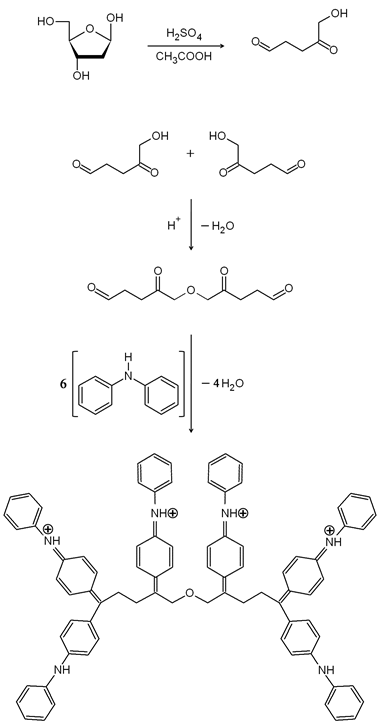
Figure 6.1 The reaction mechanism of diphenylamine reagent with deoxyribose sugar |