|
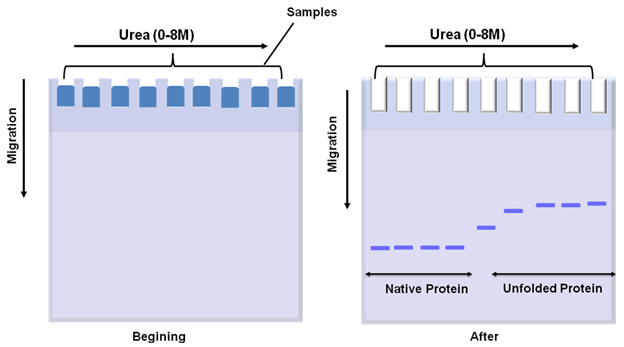
Figure 23.2: Use of SDS-PAGE to study protein folding-unfolding. |
Purification of the antigen- Preparative SDS-PAGE is routinely been used to purify the protein (antigen) to generate antibody (Figure 23.3). Protein of interest is produced in large quantity in the bacteria or other suitable expression system. Afterwards, the crude bacterial lysate is resolved on a midi or maxi gel containing a fused lane to load large amount (~2-3ml) of the lysate. A single lane of the gel can be analyzed either by staining or with western blotting to identify the position of the protein in the gel. The gel portion containing the desired protein is cut and the protein is electroeluted from the gel. The protein is lyophilized and used for immunization of the animal such as mouse or rabbit.
Protein-protein interaction- There are two approaches in which vertical gel electrophoresis can be used to study the protein-protein interaction. In approach I, protein A and B is incubated in an invitro reaction to form the complex AB. Now the formation of complex AB can be analyzed on a native PAGE (Figure 23.4). As shown in figure 23.4, once the complex is formed there will be a shift of the band position in comparison to the individual protein bands. In approach 2, the protein A is resolved on the SDS-PAGE and transferred on the nitrocellulose membrane. The membrane is blocked with the 1% BSA over-night at 4°C. Nitrocellulose membrane is incubated with the protein B over-night at 4°C. Membrane is washed with the buffer and probed