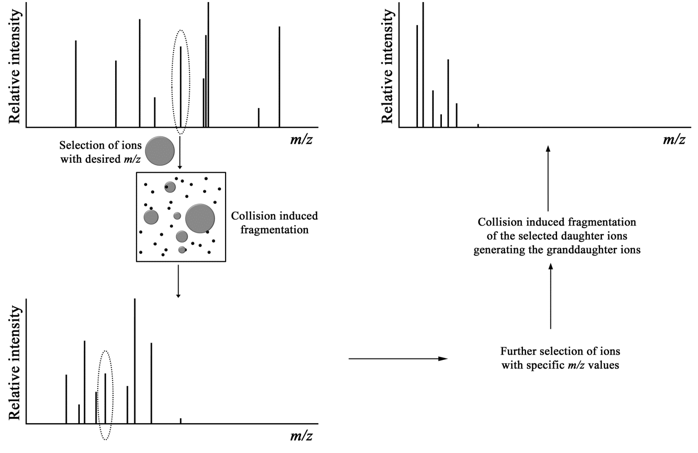
Figure 13.4 Principle of protein sequencing using tandem MS
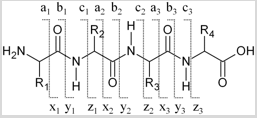
Box 13.1: Peptide fragmentation Fragmentation of peptides in a collision cell occurs in a well-defined manner; the fragmentation largely occurs along the peptide backbone with some side-chain fragmentation. The cleavage along the peptide backbone can occur at NH–Cα, Cα–CO, and CO–NH bonds. Each cleavage produces two species, one of which is charged and the other one neutral. As the charge can lie on any of the species produced, six different types of ions are generated. The nomenclature of these ions is shown in the figure below:
CO-NH is the most common cleave site. The difference in the masses of the adjacent b ions or y ions enables identification of the terminal amino acids thereby providing sequence information. Side-chain fragmentation is also useful as it provides information about side-chain modifications, if any.
|