29.4 Effect of cystic fibrosis on different organs
• Sinuses: Inflammation of sinuses resulting from infection (sinusitis).
• Lungs: Build-up of thick, sticky mucus in the lungs resulting in bacterial infection and widened airways.
• Skin: Production of salty sweat by the sweat glands.
• Liver: Blockage of biliary ducts takes place.
• Pancreas: Blockage of pancreatic duct takes place.
• Intestines: Unable to fully absorb the nutrients.
• Reproductive organs: Absence of vas deferens in male.
29.5 Pathogenesis of Cystic Fibrosis:
As a result of mutation in the long arm of chromosome number 7 the CTFR protein can no longer function properly leading to deranged or unbalanced transport of chloride, sodium and bicarbonate ions. This unbalanced transport of CFTR-affected ions leads to increased sodium and chloride content in sweat and increased resorption of sodium and water from the respiratory epithelium causing mucostasis characterized by relative dehydration of the airway epithelium and alteration in the tenacity and viscosity of mucous and ciliary dysfunction.
Figure 29.2 Mechanism of cystic fibrosis pathogenesis:
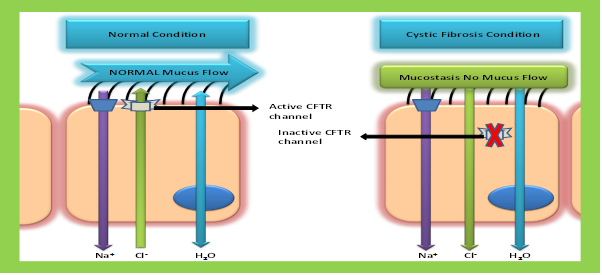
Mucostasis causes less washout of pathogenic organisms and blockage of airway leading to c hronic infection, recurrent bronchiectasis and other manifestations of cystic fibrosis. The defect in the CFTR protein also causes disorders in the gut epithelium, pancreas, liver and reproductive tract as mentioned above.