40.6 Arenaviruses
The family Arenaviridae contains the viruses which are usually associated with rodent-transmitted disease in humans. The virus particles are spherical with a diameter of around 110-130 nm. The virus contains negative strand RNA as a genetic material. Infection of Arenaviruses leads to hemorrhagic disease in humans that are often fatal.
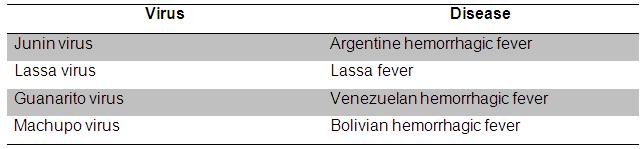
Table 40.1 Different Arenavirus diseases:
40.7 Prions
Prions are the infectious agents made up of only proteins (No DNA or RNA) and were discovered by Stanley Prusiner. Prions are propagated by transmitting the misfolded form of the protein. Prion diseases or transmissible spongiform encephalopathies (TSEs) are a family of rare progressive neurodegenerative disorders of humans and animals. They are characterized by long incubation periods, spongiform changes in brain, and a failure to induce inflammatory response.
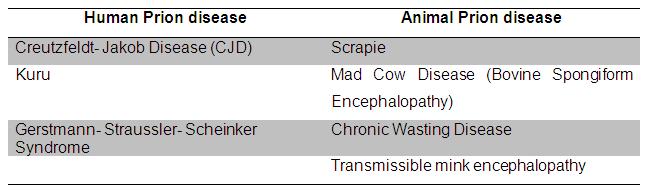
Table 40.2 Different prion diseases in human and animals:
40.8 Viroids
Viroids are plant pathogen that contains circular single stranded RNA as a genetic material. They are discovered by Theodor Diener in 1971. Viroids contain small RNA of around 250 to 500 nt and do not encode any proteins. The Potato spindle tuber viroid was the first viroid to be identified.