30.4.4 Live viral vaccines involving recombinant viruses
Recombinant viruses involve the insertion of genes that encode an antigen into a noncytopathic virus, which provide immunity following its introduction to a susceptible host. They offer protection by eliciting both innate and adaptive immune response. However in some cases safety is the issue.
30.4.5 DNA vaccines
This founds the basis of most fundamental work being done in current times. DNA vaccine strategy involves inoculation of a plasmid containing complementary DNA encoding a protein antigen. DNA vaccines elicit both humoral and cell mediated response even without any adjuvant administration but their effectiveness needs more experimentation and verification.
30.4.6 Adjuvants
Adjuvants are the immunogenic substances that do not provide immunity by themselves but enhance the immunogenicity of the vaccines to which they are administered with.
30.4.7 Passive immunization
Passive immunization is another way of providing protective immunity. This can be done by transfer of specific antibodies and are useful in cases like snake bite. Passive immunity does not offer long lasting memory because it is short lived and does not generate memory.
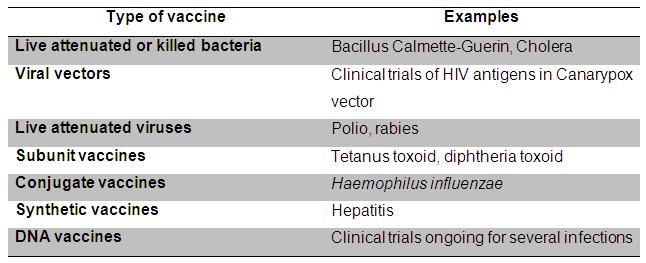
Table 30.2 Vaccine development strategies: