30.3.3 Immune evasion by Parasites
Parasites have varied mechanism to evade immune response due to some modifications.
• Parasites escape the immune system by preventing host immune response and by discounting their immunogenicity.
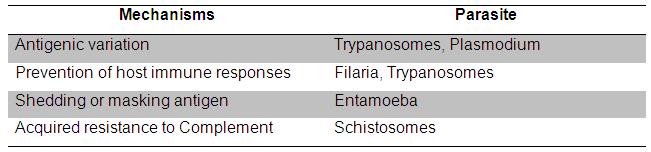
• They evade immune mechanism by bringing antigenic variation including changes in surface antigens by masking or shedding their antigens.
• One more way to evade immune response is by developing resistance to immune effector mechanisms.
Table 30.1 Mechanisms of immune evasion by parasites:
30.4 Approach for vaccine development
Vaccination is an effective strategy for restraining infections. Remarkably potent vaccines are those that are successful in provoking high-affinity antibodies and memory cells. Most of the vaccines developed, function by inducing humoral immune response in the host.
30.4.1 Attenuated and Inactivated Bacterial and viral vaccines
Vaccines containing intact nonpathogenic microbes are made after attenuating the virus or by killing the microbes taking care of their immunogenicity. Attenuated viral vaccines prove beneficial because they evoke effective innate and adaptive immune responses. Live attenuated bacterial vaccines used nowadays offer protection but for small duration while live attenuated viral vaccines elicit good response and long lasting immunity. Viral vaccines perform better because of their adaption in cell culture. However live viral vaccines always face a potent risk of reversion to virulence and hence safety is the main concern for such viruses. To minimize such risks inactivated vaccines are used such as influenza vaccine.
30.4.2 Purified Antigen (Subunit) Vaccines
Subunit vaccines are those that contain a purified antigen and also needs to be given along with an immunogenic enhancer called an adjuvant. Construction of subunit vaccine involves isolation of a specific protein from a virus or bacteria before administration. Diphtheria and tetanus are the best examples of subunit vaccines.
30.4.3 Synthetic antigen vaccines
This concept involves identification of an epitope or an antigen and designing it in the laboratory to be used in future as a vaccine.