The basic steps in DNA cloning involves the following,
- A fragment of DNA is inserted into a carrier DNA molecule, called a vector, to produce a recombinant DNA.
- The recombinant DNA is then introduced into a host cell, where it can multiply and produce numerous copies of itself within the host. The most commonly used host is the bacteria, although other hosts can also be used to propagate the recombinant DNA.
- Further amplification of the recombinant DNA is achieved when the host cell divides, carrying the recombinant DNA in their progenies, where further vector replication can occur.
- After a large number of divisions and replications, a colony or clone of identical host cell is produced, carrying one or more copies of the recombinant DNA.
- The colony carrying the recombinant DNA of interest is then identified, isolated, analyzed sub-cultured and maintained as a recombinant strain.
7-1.3 Expression of a foreign protein in a microbe
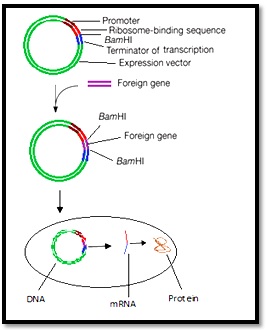
Figure7-1.3: Foreign protein expression in a microbe
There are several methods by which genetic alterations of producer microbial strains can be done for maximization of products or metabolites.