Advantage:
- No size limitation of insert DNA.
- Applicable to wide range of species.
- Less time consuming and short generation time.
Limitation:
- Low success rate
- Random integration of transgene constructs to host chromosome, resulting in undesirable effect or phenotype.
- Potential undesired insertional mutagenesis
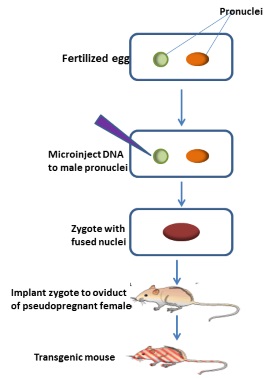
Fig 6-3.3.4: Transgenic mice by DNA microinjection
6-3.3.5 Nuclear Transfer:
Nuclear transfer involves transfer of nuclei from a donor cell (somatic cell or stem cell) to an enucleated oocyte, thereby reprogramming development. This process is also referred as somatic cell nuclear transfer (SCNT). In early 1980, first mammalian nuclear transfer experiments were conducted in mice. In 1997, a team lead by Ian Wilmut created Dolly the sheep became the first vertebrate clone to generate by somatic cell nuclear transfer. The technique however was not full proof as Dolly was reported to have progressive lung disease and premature arthritis and died prematurely at the age of 6 in 2003.