4-3.2.2. Synthesis of first and second strand of cDNA
• mRNA being single-stranded cannot be cloned as such and is not a substrate for DNA ligase. It is first converted into DNA before insertion into a suitable vector which can be achieved using reverse transcriptase (RNA-dependent DNA polymerase or RTase) obtained from avian myeloblastosis virus (AMV).
• A short oligo (dT) primer is annealed to the Poly (A) tail on the mRNA.
• Reverse transcriptase extends the 3´-end of the primer using mRNA molecule as a template producing a cDNA: mRNA hybrid.
• The mRNA from the cDNA: mRNA hybrid can be removed by RNase H or Alkaline hydrolysis to give a ss-cDNA molecule.
• No primer is required as the 3´end of this ss-cDNA serves as its own primer generating a short hairpin loop at this end.This free 3´-OH is required for the synthesis of its complementary strand.
• The single stranded (ss) cDNA is then converted into double stranded (ds) cDNA by either RTase or E. coli DNA polymerase.
• The ds-cDNA can be trimmed with S1 nuclease to obtain blunt–ended ds-cDNA molecule followed by addition of terminal transferase to tail the cDNA with C's and ligation into a vector.
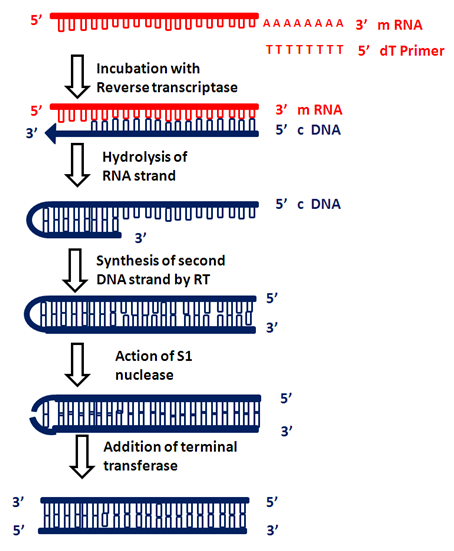
Figure 4-3.2.2: Synthesis of first and second strand of cDNA.