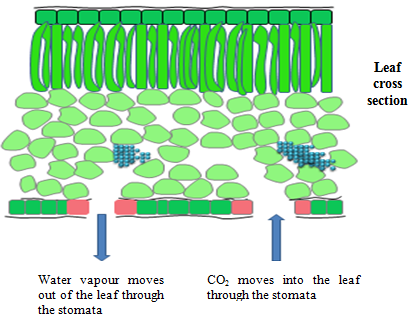
Figure 3: Water vapor moves out and carbon dioxide move into the leaf through the stomata
4. Carbon dioxide and oxygen: Carbon dioxide is one of the vital elements for plant growth. The manufacturing of sugar by plants requires the presence of carbon dioxide. Plant growth requires a tremendous amount of carbon dioxide. Plants can use as much as 1500 ppm of carbon dioxide. When all other growth influencing factors are kept in their ideal ranges, CO2 becomes the limiting factor. This means as carbon dioxide is increased, growth rates and yields also increases. Oxygen is essential for plant respiration and utilization of photosynthesis byproducts. No nutrient absorption occurs at the root zone unless oxygen is present. At a molecular level, oxygen is required to transmit nutrients across the cell wall and into the roots. As oxygen levels are increased at the root zone, nutrient absorption continues to increase as well. Plants produce oxygen gas during photosynthesis to produce glucose but then require oxygen to undergo aerobic cellular respiration and break down this glucose to produce ATP. When oxygen is absent, hypoxia occurs which affect nutrient uptake of a plant and inhibits respiration within the root cells.