Meiosis
In the last chapter you studied about mitosis as cell division. Meiosis is the second type of cell division occurring in the gametic cells. Meiosis was first described by the German biologist Oscar Hertwig in 1876 in the sea urchin egg. Meiosis is the process of cell division that occurs only in the germ cells of eukaryotes unlike mitosis which takes place in the somatic cells. Unlike mitosis meiosis is only initiated once in the life cycle of eukaryotes (John 1990). The cells produced by meiosis are known as gametes or spores. Meiosis leads to reduction of chromosome number, of a diploid cell (2n) to half (n). Meiosis begins with one diploid cell containing two copies of each chromosome and ultimately produces four haploid cells containing one copy of each chromosome which have undergone recombination, giving rise to genetic diversity in the offspring. High order transcriptional and translational control of genes known as “meiome” controls the events of meiosis (Snustad 2008).
Cell cycle and Meiosis
The preparatory steps that lead up to meiosis are identical in pattern to mitosis and occurs in the interphase of the mitotic cell cycle. Interphase is followed by meiosis I and then meiosis II.
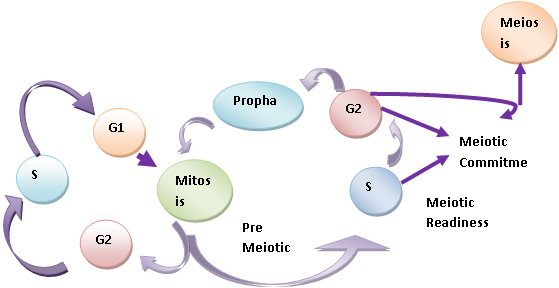
Figure 1: Position of meiosis in the Cell cycle.