The chemical reactions which might explain the formation of these compounds are as follows:
1. Formation of HCN, HCHO etc:
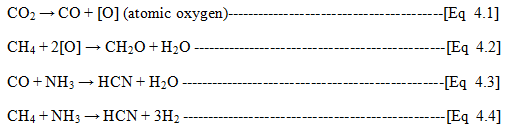
2. Formation of Glycine: The formaldehyde, ammonia, and HCN then react to form glycine.

STEPS PROPOSED IN THE ORIGIN OF LIFE: According to the chemical theory of origin of life, a series of chemical synthesis give rise to life. As per the hypothesis, origin of life have four major steps:
(1) Formation of Inorganic molecules: The high temperature of primitive earth didn’t allow the condensation of atoms to form inorganic molecules. As temperature of earth goes down, condensation of different atoms give rise to simpler molecules. The elements most abundant on the primitive earth are hydrogen, oxygen, nitrogen and carbon. The reaction of these molecules give rise to the different gases such as hydrogen, nitrogen, ammonia, methane, carbon dioxide and water vapor. The molecules present on initial earth is given in the Figure 4.2. The energy for these reactions was provided by sunlight, lighting or volcanic eruptions.
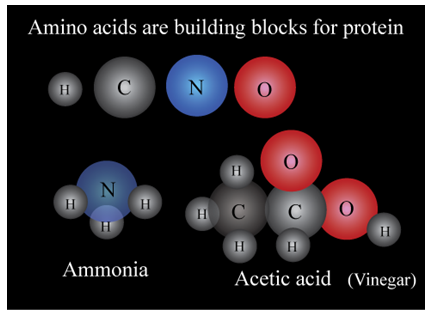
Figure 4.2 : Different molecules prevalent on primitive earth.