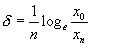
Motion; Logarithmic Decrement; Systems with Coulomb Damping.

|
||||||||||||||||||||||||||||||||||||||||||||||||||||||||||||
|
Module 8 : Free Vibration with Viscous Damping; Critical Damping and Aperiodic Motion; Logarithmic Decrement; Systems with Coulomb Damping. |
|||||||||||||||||||||||||||||||||||||||||||||||||||||||||||||
|
||||||||||||||||||||||||||||||||||||||||||||||||||||||||||||||
| Lecture 3 : Logarithmic Decrement | ||||||||||||||||||||||||||||||||||||||||||||||||||||||||||||||
|
||||||||||||||||||||||||||||||||||||||||||||||||||||||||||||||
|
||||||||||||||||||||||||||||||||||||||||||||||||||||||||||||||
 and
and  at time
  and
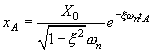
and  respectively.The periodic displacement from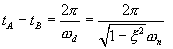
 is damped natural frequency.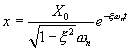
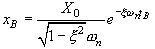

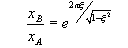
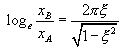
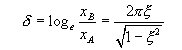
 <<1
<<1