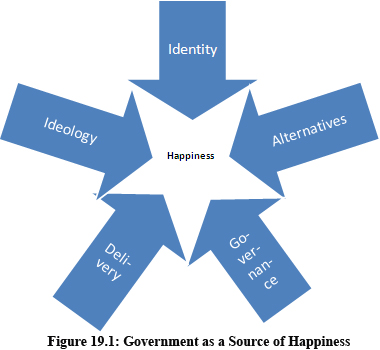
The relationship, however, becomes more uncertain and complex in a society like India which is divided heavily both horizontally and vertically: horizontally along gender and abilities; vertically along caste and class. People of India have multiple identities and they may identify with several leaders on several bases. During the freedom struggle the whole India was united under the nationalist leadership of Gandhi and Nehru and in the initial years of independence nationalistic fervor was quite high. However, after the death of Nehru the caste, community, linguistic and cultural sentiments started influencing the political culture of India. The new political leaders too used such sentiments for catching attention of the voters (Guha, 2012). Now the social identities are firmly established among masses though they often realize that the identity politics is doing harm to unity and progress of the nation.They feel happy if the chief minister of a state or prime minister or president of the country belongs to their caste. They also feel happy if prime minister or president of the country belongs to their region. This identification may not give them anything in concrete terms but can be a source of subjective well-being. Among the more aware people ideology is another source of happiness. People are known to go to the extent of sacrificing their life quite happily to promote their ideology, which may take different forms under different conditions. People’s happiness also depends on what the state is seen to be doing in terms of programs and policies. State defines development and can decide quite a lot about growth rate of income, and about growth of different sectors of economy. State can take up various welfare measures in the interests of different groups in society. People also believe that honest and transparent leadership will be more sensitive to various needs of the people. Lastly, the relationship between state and people is mediated by the fact whether they have or do not have alternative leaders and parties for change in case they are not happy with the existing regime. As in case of other utilities presence or absence of alternatives may add to clarity, confusion, happiness or frustration. In several cases, for example in Mao’s China, state also interfered in the culture (cultural revolution), which can make some people and groups happy and other people and groups unhappy.
|