Understanding Lights and Shadows:
To develop a three-dimensional form, we need to know where to place the light, dark, and medium values of your subject. This will depend on your light source. The angle, the distance, and the intensity of the light will affect both the shadows on an object (called "form shadows") and the shadows the object throws on other surfaces (called "cast shadows"). We might want to practice drawing form and cast shadows on a variety of round and angular objects, lighting them with a bright, and a direct lamp so that highlights and shadows will be strong and well-defined.
Highlighting:
We either "save" the white portion of our paper for the brightest highlights or "retrieve" them by picking them out with an eraser or painting them on with white gouache.
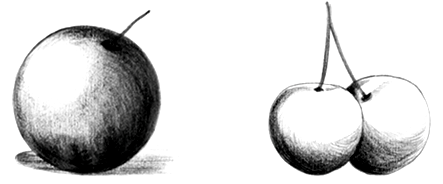
Fig.82: Adding highlight
Shading:
The middle values of these gaps have been shaded with a couple of swift strokes using the side of a soft lead pencil. Then increase the pressure on our pencil for the darkest values, and leave the paper white for the lights.
Shading Consistently:
If we have only one light source, make sure that all the highlights are facing a single direction and all the shadows are oriented in the opposite direction. If we mix them up, our drawing would not be believable.
Getting to Know our Subject:
Quick, "thumbnail" sketches are invaluable for developing a drawing. We can use them to play with the positioning, format, and cropping until we find an arrangement we like. These are not finished drawings by any means, so we can keep them rough.
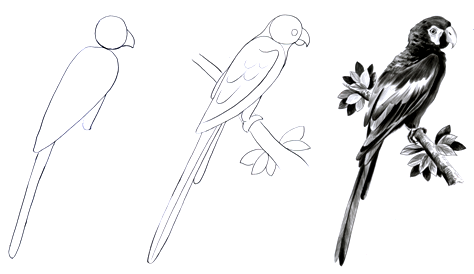
Fig.83: A quick thumbnail of a parrot and a detailed rendering
|

