PRIVATE FINANCE
Besides the major funding from the governments, private finance has also been used to fund infrastructure projects to a limited extent in both developed and developing countries. Governments provide public finance for development of infrastructure projects with the goal of meeting the social and economic objectives. On the other hand, private sector participates in infrastructure projects and provides private finance with the objective of furthering their business interests. Maximizing the return on their investment into infrastructure projects have been amongst the key business interests of private sector.
Infrastructure Projects – Cash Flow Profile
Private sector looks primarily at the cash flow profile of the project in assessing the revenue earning potential of the project. The cash flow profile of the infrastructure projects exhibits the timing of the cash flows over the lifecycle of the project. The lifecycle of an infrastructure projects can be divided into three major phases of appraisal, construction and operation & maintenance. The typical cash flow profile of infrastructure projects has cash outflows during the development and construction phases of the project followed by cash inflows during the operation phase (refer Figure 1). During the appraisal and construction phases of the project lifecycle, cash flow is negative in nature on account of the expenditures incurred towards the execution of appraisal-related studies such as feasibility study, engineering design, and construction of the infrastructure facilities. Commissioning of the completed infrastructure facilities marks the commencement of project operation phase. The provision of infrastructure services will generate revenues for the project along with the expenditures for operation and maintenance of the facilities. The cash flows in this phase is the net project revenues after deducting the operation and maintenance expenditures.
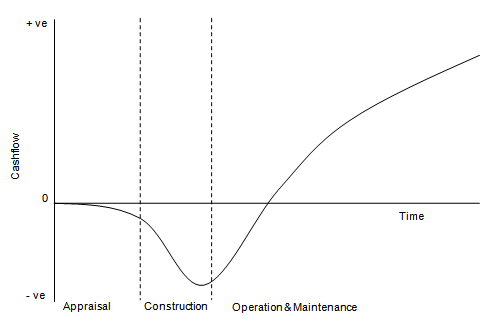
Figure 1. Typical cash flow profile of infrastructure project from private sector's perspective