Soil contamination by organic or inorganic pollutants is caused by a number of industries such as chemical, pharmaceuticals, plastics, automobile, nuclear industries, biomedical wastes, mining industries, municipal solid waste. At times, it becomes essential to decontaminate soil. Broadly the soil decontamination is done in two ways: (a) pump and treat in which the pollutant is pumped out using external energy source, treated using methods such as incineration, radiation, oxidation etc (b) removal of contaminated soil, treat it and then returning back to its original place. This module is meant to briefly introduce various soil/ water decontamination processes. The scientific basis and the reactions involved in these processes are acid-base chemistry, solubility-precipitation, ion exchange, redox, complexation, sorption, etc. which are discussed in module 2.
4.1 Contaminated site characterization/ assessment
Broadly, site characterization or contaminated site assessment (CSA) is important for:
a) Determining concentration and spatial distribution of harmful pollutants under consideration.
b) Determining the extent of site remediation (zonation) based on which the suitable remediation technique is selected.
c) For assessing environmental and human health risk due to contamination.
More specifically, CSA is required to answer the following questions:
a) What is the source of contaminants?
b) What is the type and physical form of contaminants?
c) Spatial and depth wise extent of contamination
d) Whether the contaminants are stationery or movable?
e) If they are movable, then identify the significant pathways.
f) Identify the potential receptors of contaminants.
4.2 Selection and planning of remediation methods
Fig. 4.1 (USEPA 1991) presents a flowchart on various processes involved in the planning of site remediation.
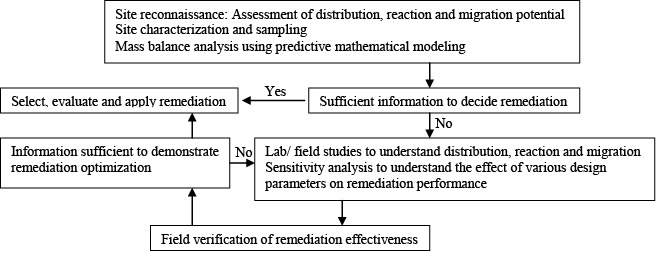
Fig. 4.1 Processes involved in deciding contaminated site remediation
It can be noted from Fig. 4.1 that the most important step for making a decision on site remediation is collection of data. Table 4.1 summarizes the essential data to be collected as part of site reconnaissance and site characterization.
Table 4.1 Summary of data required for planning contaminated site remediation
Data |
Details |
Method of acquisition |
1) Site history and land use pattern |
a) Population density within 3 km from the contaminated site |
Field |
2) Geologic and hydrologic |
a) Topography |
Field |
| 3) Geotechnical | a) Soil sampling and classification |
Field |
| 4) Waste | a) Water quality |
Field/ Lab |