|
In paving jobs, to classify a binder, density property is of great use.
In most
cases bitumen is weighed, but when used with aggregates, the bitumen is
converted to volume using density values.
The density of bitumen is greatly
influenced by its chemical composition.
Increase in aromatic type mineral
impurities cause an increase in specific gravity.
The specific gravity of
bitumen is defined as the ratio of mass of given volume of bitumen of known
content to the mass of equal volume of water at 27 C.
The specific gravity
can be measured using either pycnometer or preparing a cube specimen of bitumen
in semi solid or solid state.
The specific gravity of bitumen varies from 0.97
to 1.02. C.
The specific gravity
can be measured using either pycnometer or preparing a cube specimen of bitumen
in semi solid or solid state.
The specific gravity of bitumen varies from 0.97
to 1.02.
Viscosity denotes the fluid property of bituminous material and it is a measure
of resistance to flow.
At the application temperature, this characteristic
greatly influences the strength of resulting paving mixes.
Low or high
viscosity during compaction or mixing has been observed to result in lower
stability values.
At high viscosity, it resist the compactive effort and
thereby resulting mix is heterogeneous, hence low stability values.
And at low
viscosity instead of providing a uniform film over aggregates, it will
lubricate the aggregate particles.
Orifice type viscometers are used to
indirectly find the viscosity of liquid binders like cutbacks and emulsions.
The viscosity expressed in seconds is the time taken by the 50 ml bitumen
material to pass through the orifice of a cup, under standard test conditions
and specified temperature.
Viscosity of a cutback can be measured with either
4.0 mm orifice at 25 C or 10 mm orifice at 25 or 40 C.
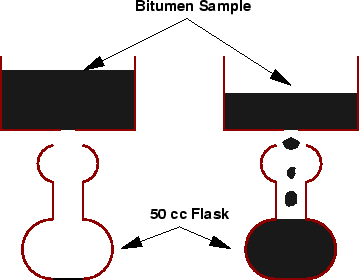
Figure 1:
Viscosity Test
 |
|

