- Vitamin K is required for proper clotting of blood. The deficiency of vitamin K is rare due its presence in the leaves of green plants as well as its synthesis by intestinal bacteria.
- Vitamin E is a radical inhibitor (anti-oxidant) found in biological system. It is water insoluble and traps radicals formed in non-polar membranes.
- The body synthesizes vitamin D from 7-hydrocholesterol, found in skin, in the presence of ultraviolet light.
10.9 Steroids
Steroids are lipids having a tetracyclic system composed of three six membered rings and one five membered ring. Their non-polar character allows them to cross the cell membranes, so they can leave the cells in that they are produced and enter their target cells.
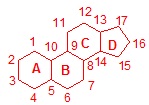
The Steroid Ring System
In animals, the most abundant member of steroid is cholesterol, which is the precursor of all other steroids. Cholesterol has 8 asymmetric centers, thus 256 stereoisomers are possible. However, in nature only one exists. Cholesterol is an important component of cell membranes and related to heart disease.
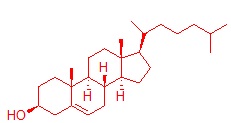
Cholesterol
Steroids can be broadly classified into five groups: glucocorticoids, mineralocorticoids, androgens, estrogents, and progestins.
- Glucocorticoids are involved in metabolism of glucose, proteins and fatty acids. Cortisone is an example for this type of steroid. Cortisone is used as anti-inflammatory agent to treat arthritis.
- Mineralocorticoids are responsible for the increased reabsorption of Na+, Cl- and HCO3- ions by the kidneys that can lead to an increase in the blood pressure. Aldosteron is an example of a mineralocorticoid.
- Antrogens are male sex hormones. They are responsible for the development of male secondary sex characteristics during puberty. Testosterone is an example of androgens.