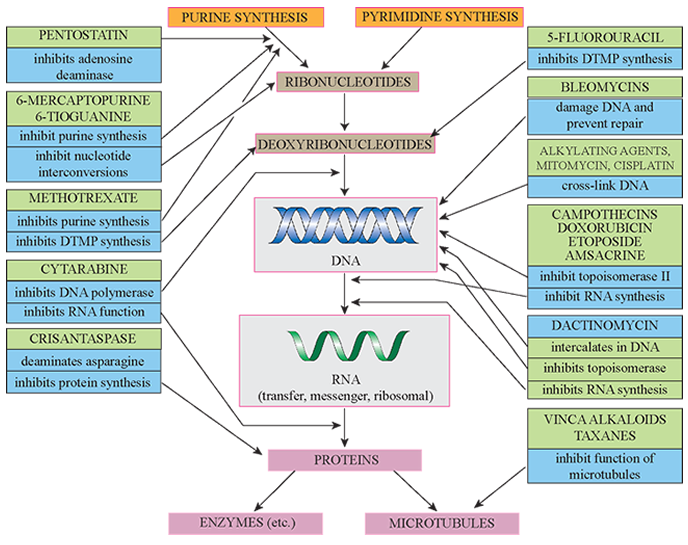
4.2.3. How Chemotherapy Works?
 Chemotherapy medicines prevent cancer cells from growing and spreading by destroying the cells or stopping them from dividing.
Cancer cells tend to grow and divide very quickly with no order or control. Because they're growing so fast, sometimes cancer cells break away from the original tumor and travel to other places in the body. Chemotherapy weakens and destroys cancer cells at the original tumor site AND throughout the body.
Most normal cells grow and divide in a precise, orderly way. Still, some normal cells do divide quickly, including cells in hair follicles, nails, the mouth, digestive tract, and bone marrow (bone marrow makes blood cells). Chemotherapy also can unintentionally harm these other types of’/rapidly dividing cells, possibly causing chemotherapy side effects.
When treating early-stage breast cancer, it's fairly common for chemotherapy to be given after surgery, as soon as you recover. Doctors call this "adjuvant" chemotherapy because it's given in addition to surgery, which is considered the primary treatment.
In some cases, chemotherapy is given before surgery to shrink the cancer so that less tissue has to be removed. When chemotherapy is given before surgery, it's called "neoadjuvant" chemotherapy.
In many cases, chemotherapy medicines are given in combination, which means you get two or three different medicines at the same time. These combinations are known as chemotherapy regimens. In early-stage breast cancer, standard chemotherapy regimens lower the risk of the cancer coming back. In advanced breast cancer, chemotherapy regimens make the cancer shrink or disappear in about 30-60% of people treated. Keep in mind that every cancer responds differently to chemotherapy.
4.2.4. Side Effects of Chemotherapy
Since chemotherapy also affects normal actively dividing cells such as those in the bone marrow, the gastrointestinal tract, the reproductive system and in the hair follicles, most patients experience some degree of side effects, which may include any or all of the following:
- Nausea and vomiting: This is a common side effect of chemotherapy. It can be controlled with anti-sickness drugs (anti-emetics).
- Fatigue: Chemotherapy affects different people in different ways. Some find they can lead fairly normal lives during treatment, but many find they become tired and have to take things more slowly. Just do as much as you can and be careful not to over-strain. Taking short naps may help.
- Hair loss: This is the least harmful side effect, yet can be the hardest to bear. The use of a cold compress around the scalp when taking chemotherapy helps stop hair loss to some extent. Hair will grow back surprisingly quickly once treatment is over.
- Susceptibility to infections: When the drugs act on cancer cells, they also destroy normal cells including white blood cells, which fight infections. When white blood cells are in short supply, the body's immune system is weakened making you susceptible to infections. Any fever should be reported to the doctor.
- Decrease in blood cell count: During chemotherapy, you may become anemic. Regular blood tests are done to ensure this does not happen. If necessary, blood transfusions are given.
- Mouth sores and ulcers: Some chemotherapy drugs cause sores and ulcers in the mouth. Regular use of a mouthwash is very important.
4.2.5. Drugs Used in Cancer Chemotherapy
- Cytotoxic Agents
- Alkylating Agents
- Antimetabolites
- Cytotoxic antibiotics
- Plant derivatives
- Hormones
- Suppress nat'l hormone secr'n or antagonize hormone action
- Misc (mostly target oncogene products)