A second reason is the greater likelihood of nighttime inversions, in which warm layers of air above the Earth’s surface tend to trap carbon monoxide (and other pollutants) near the ground.
When the concentration of carbon monoxide reaches about 100 ppm, at which point carbon monoxide has bonded to iron in about 15 percent of the hemoglobin molecules present in blood
The control of carbon monoxide emissions is based on the principle that less of the gas is produced when the efficiency of combustion is improved.
One device to achieve this objective is the catalytic converter, now required on all motor vehicles.
A catalytic converter provides a second stage of combustion in motor vehicles, allowing carbon monoxide and other unburned components of a fuel to be oxidized before release into the atmosphere.
Another way of reducing the amount of carbon monoxide released during combustion is to add something to the fuel that will increase the amount of oxygen available to support combustion and, therefore, to increase the efficiency of combustion.
Fuels that contain such additives are known as oxygenated gasoline.
Oxygenated gasoline is one form of reformulated gasoline, a term that applies to any type of gasoline that has been specifically designed to burn more efficiently and produces less carbon monoxide and other pollutants.
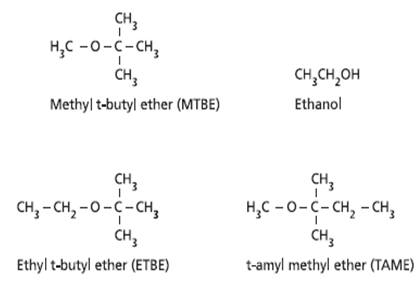
The additives used in oxygenated gasoline are alcohols and ethers, the most common of which are ethanol (ethyl alcohol; grain alcohol) and methyl t-butyl ether (MTBE). Two less commonly used additives are ethyl t-butyl ether (ETBE) and t-amyl methyl ether (TAME).