Rapid Coagulation
Rapid coagulation was studied by Smaluchowski and Einstein in 1917. The simplest case for rapid coagulation would be when interaction energy between two particles is zero in the entire region till the contact distance, where it goes to minus infinity (Fig. 10.8). So, there is perfect sink at the point of contact which means that once the particles are in contact, they will always stick together i.e. particles undergoing random Brownian movement collide and stay in contact. We can say that there is a pseudo chemical reaction represented as
p + p → 2p
which is an irreversible reaction. In other words we can say that 2 free particles combined to form a doublet (ignoring higher order clusters, as they are rare initially). For simplification we can assume the particles are spheres of radius ‘R’. It is assumed that diffusivity is not affected by near by molecule thus hindered diffusion is ignored.
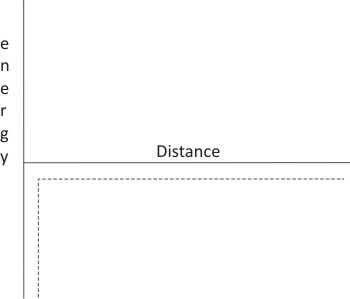
Fig. 10.8: Energy for rapid coagulation (Assumed)
|