1. Design and construction features of column internals
1.1 Plate construction
Two types of plate constructions are practiced depending on the diameter of the column:
Sectional construction: The trays, downcomer segments and other tray components are usually constructed in sections for column diameter of 1 m and above. The plate sections are designed in such that it can be removed through the column manholes, preferably detachable from both above tray and tray below. The plate sections are installed usually starting from one side on a peripheral supported ring welded to inside shell wall. The support ring is not normally extended into the downcomer area and tray perforations needs to be avoided over the support ring area. Support ring width is usually between 40 to 90 mm. Trays are either clamped or bolted to the support ring.
The support beams prevent tray deflection under load for larger diameter column. One or more major beams are required for large diameter column (usually >3 m). Trays can be supported by support rings and minor beams for small diameter column (usually <3 m) i.e. omitting the major beams. The beams are commonly placed at about 0.6 m apart and should able to hold on the necessary weight during column operation as well as installation.The maximum plate deflection under the operating conditions should be less than 3 mm for tower diameter more than 2.5 m ( [1] page 564 ). The number of plate sections installed under an apron and across accumulator trays is kept as minimum as possible. Clearance should be provided between the bottom of the beams and the tray below for the perpendicular installation of the beams to the liquid flow direction on the tray below (Figure 8.1) i.e. in case of cross flow.
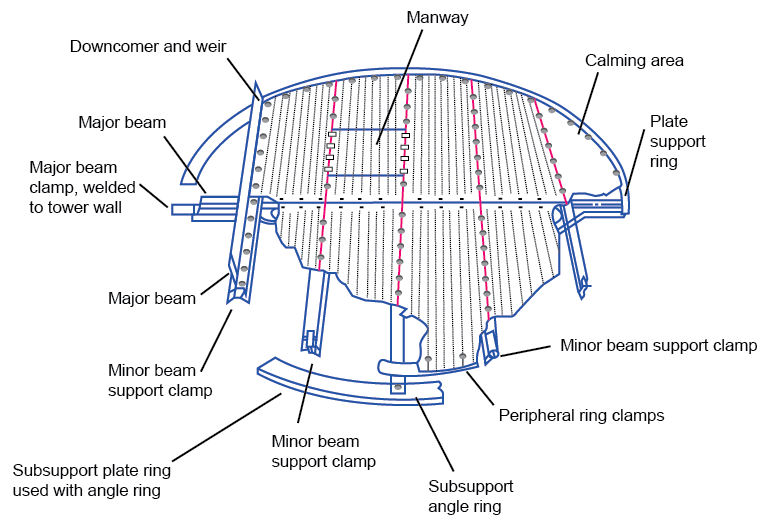
Figure 8.1. Common sectional construction of plate ( [1] page 561 ).