21. Using a syringe, inject the buffer through the upper adapter tubing while holding the outlet upwards so that the net becomes wet and air bubbles trapped in the net escape though the outlet.- 23 Push the adapter little down, without touching the gel bed. This causes removal of some buffer from top of the column assembly ensuring no air inside the column.
22. Gently insert the top adapter in the column at 45° angle to avoid trapping any air, remove the syringe, and tighten the adapter.
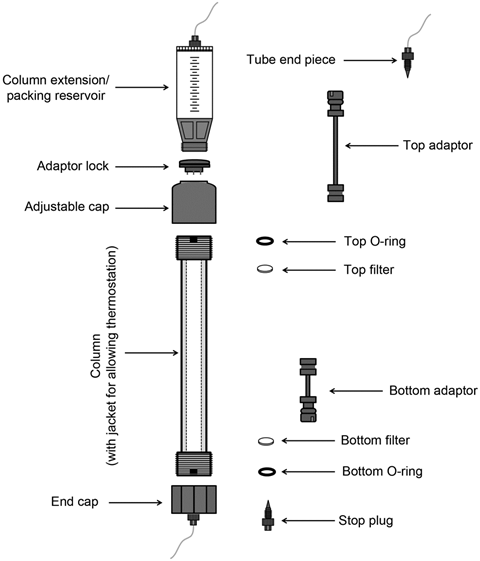
Figure 22.3 Column and its attachments
24. Fill the buffer reservoir with the buffer and place it at a height higher than the pump.
25. Connect the buffer reservoir to the pump and purge the pump with the buffer.
26. Keep a low flow rate and allow the buffer to ooze out of the pump outlet tube.
27. Stop the flow and make a drop-to-drop connection of the pump outlet to the inlet of the column tube or the column extension tube.
28. Remove the bottom stop plug.
29. Start the pump at a flow rate lower than the maximum flow rate recommended by the manufacturer for the gel material.
30. Let the flow continue until the height of the gel becomes constant (typically 3-4 bed volumes of the buffer).
31. Stop the pump and remove the column extension along with the adapter. This creates a vacant space in the column tube
32. Fill the vacant space in the column tube by carefully adding the buffer.
33. Adjust the bed height, if required:
a. If the bed height is more than that is desired, gently swirl the upper part of the gel bed with a glass rod and aspirate out the excess slurry.
b. Allow the gel to settle down.
34. Fix the inlet adapter on column tube as discussed in steps 21 – 23.
35. Resume the flow conditions for 1 hour.
36. Stop the pump and lower the adapter down so that it is flush with the bed surface.
37. The column is packed . Inspect it visually for any cracks, trapped air bubbles, or any particulate material.