·
28.2 Pathogenesis and Pathology
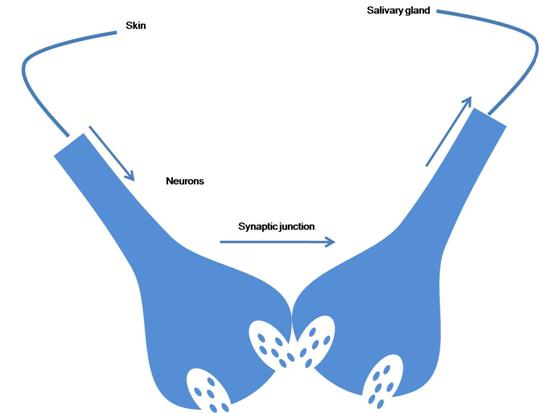
In rabies the prognosis of the disease is mainly decided by the location and severity of the site of bite and the species of animals involved. Rabies has three stages. The first stage is characterized by behavioral changes also known as prodromal stage. In the second stage called as excitative stage the animal exhibits disease in furious forms and in the third stage the animal manifests the paralytic form of the disease. After entry the virus first affects the peripheral nervous system and replicates in the brain. Dumb and paralytic forms of the disease appear as it progresses towards the central nervous system. In the nervous system the virus is formed by budding in various membranes and glands. Neurons accumulate ribonucleoprotein as intracytoplasmic inclusion bodies often termed as Negri bodies and are pathognomonic for rabies. Salivary glands help the virus to bud on plasma membrane and release it in very high concentrations through the saliva. Death usually occurs due to respiratory arrest .
Figure 28.1 progression of rabies virus through neurons in body: