·
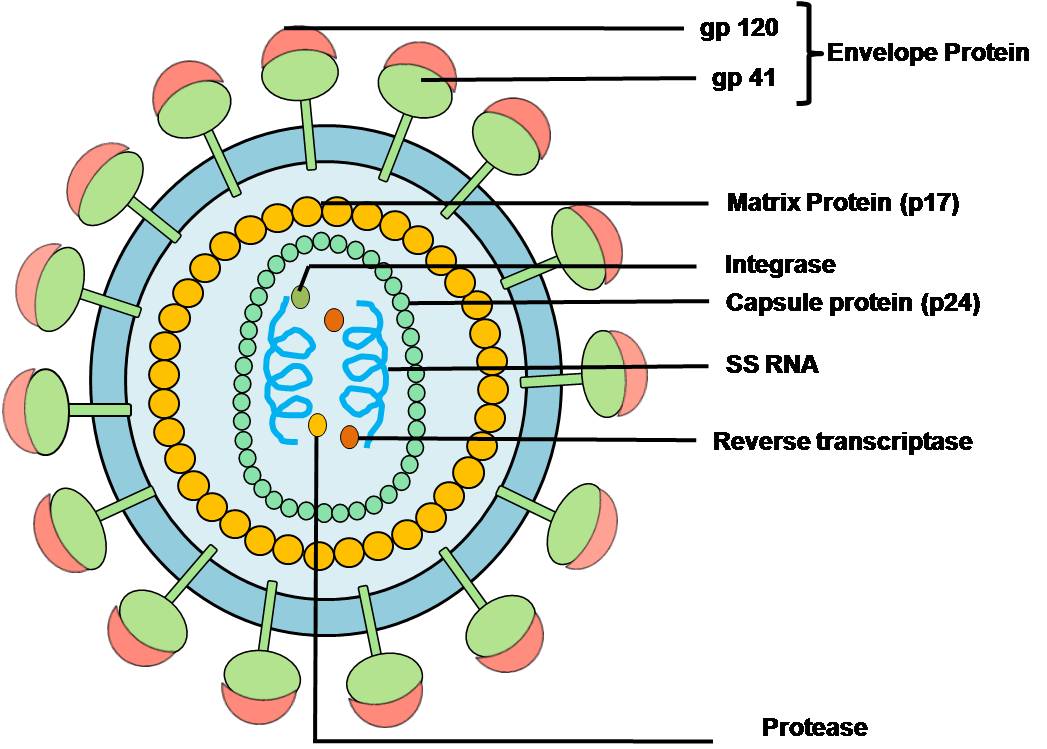
Viruses are obligate parasite which means their absolute dependence on living host system. This property of virus made it a valuable tool to study cell functions and its biology. Adenovirus is an example of DNA virus that enters the host nucleus but remains separated from the host genome and at the same time use host cell machinery for its replication. On the other hand influenza is a RNA virus that carries its own enzyme to replicate its genome while the viral proteins are synthesized by using the host cell machinery. Human immunodeficiency virus (HIV) is a retrovirus ; it contains RNA as a genetic material but it converts into DNA after entering the host cell by an enzyme called reverse transcriptase . It also contains enzymes in its virion namely, integrase and viral protease which helps HIV during maturation process inside the infected cells. Outer surface of HIV virion contains two surface glycoproteins called as gp120 and gp41 which helps in the attachment of virus to the cell surface.
Figure 2.1. Schematic diagram of HIV