·
27.1 Neutralization of microorganisms and their toxins
Most of the microorganisms attack and enter the host body after binding to a specific cell receptor present over the host cell. The specific structures present over the surface of bacteria, viruses, parasite or fungi are responsible for their attachment to the cell receptors. When the microorganism and its toxin enters or are produced inside the body the host immune system produces the antibody specific to bind their surface molecules. The binding of specific antibodies to these molecules in the microbes and toxin makes it inaccessible to the host cell and hence neutralized. The host cell produces antibodies against the surface glycoprotein hemagglutinin in influenza virus infection in order to inhibit their binding to the sialic acid receptor present on the respiratory epithelium. Similarly, tetanus toxin binds to the cellular receptors over the neurotransmitter junction leading to paralysis and lockjaw condition. The antibody produced in Clostridium tetani infection neutralizes the toxins and inhibits its binding to receptors present in the motor end plates. Neutralization of the microbes and their toxins only requires antigen binding region of the antibody, i.e Fab or F (ab)2 fragments. Most of the neutralizing antibodies in the blood are of IgG and IgA types in the mucosal surface.
27.2 Opsonization and phagocytosis
Coating of microbes by the IgG type antibody helps in their phagocytosis by macrophages and neutrophils, the phenomenon is called opsonization . The Fc receptor of the IgG containing microbes binds to the neutrophils and participates in their intracellular degradation and killing. In addition to IgG molecules, complement protein C3b also helps in the opsonization and phagocytosis of the microbes by binding to leukocytes. The substance that helps in opsonization and phagocytosis including antibodies and complements are called as opsonins .
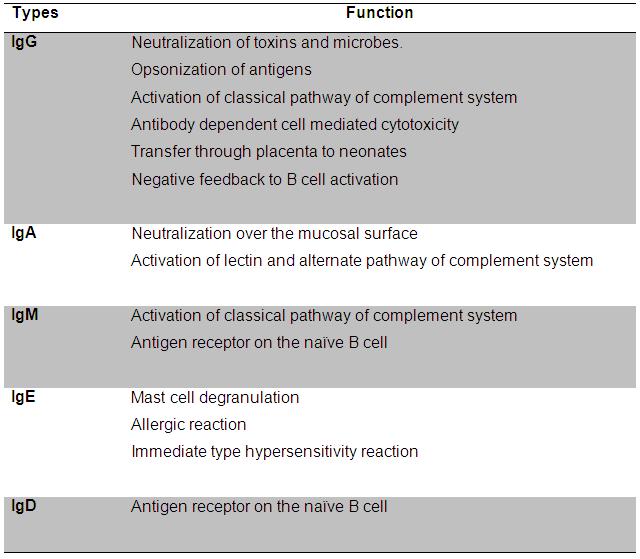
Table27.1 Functions of different antibody: