·
17.3 Changes in the marker molecules
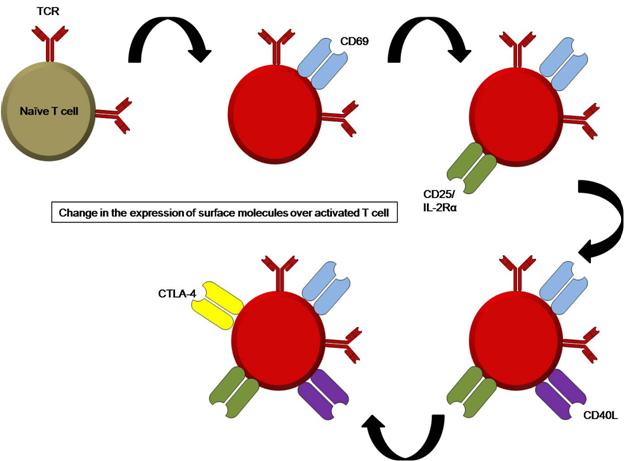
After activation T lymphocyte undergoes various phases of differentiation that leads to continual changes in the expression of the surface molecule markers. A plasma protein, CD69 expresses after few hours of T lymphocyte activation, they help to retain the lymphocyte inside lymphoid organs for its differentiation into effector and memory immune cells. The activated T lymphocyte then expresses receptors for cytokines IL-2 called CD25 (IL-2Rα), which helps to promote the growth of activated T cells. Following 24 to 48 hours of T cell activation, ligands for CD40 (CD40L) expresses over the lymphocyte that helps to produce an effector immune response against peptide loaded over the macrophages and B cells. To balance the activated T cell response CTLA-4 expresses over the cells to inhibit the exaggerated T cell activation. After these all events of surface expression, T cells express the molecules that help them to migrate to lymphoid organs such as L-selectin and leukocyte function antigen-1 (LFA-1).
Figure 17.1 Change in the surface marker molecule on the activated T cells: