7-4.4 Microbial bioremediation and GEMs
Microbial bioremediation is the process in which microorganisms like bacteria degrade or transform hazardous organic compounds like benzene, toluene,polychlorinated biphenyls(PCBs), polyaromatic hydrocarbons (PAHs), dioxins, nitro-aromatics etc. into non-toxic substances.
Naturally occurring microorganisms are incapable of degrading all toxic chemicals, especially xenobiotics. To overcome this, attempts have been made in recent years to create genetically engineered microorganisms (GEMs) to enhance bioremediation beside degrading xenobiotics. In spite of this the number of field trials for the use of genetically engineered microorganisms for bioremediation still remains limited (Peiperet al 2000, Sayleret al. 2000).The history of genetic engineering is strongly linked with the bioremediation of oil spills.
In 1971, the great scientist Prof. A M Chakrabartyhad found four different strains of the commonPseudomonasbacteria that contained enzymes which can break down various hydrocarbons. He also observed that the genes for oil-degrading enzymes were located on the extra-chromosomal elements known as plasmids. By combining these plasmids into a strain ofPseudomonas, he created a variant of Pseudomonas that was capable of breaking down the constituents of crude oil. The plasmids ofPseudomonas putida degrading various chemical compounds are TOL (for toluene and xylene), RA500 (for3, 5-xylene) pAC 25 (for 3-cne chlorobenxoate) and pKF439 (for salicylate toluene). Plasmid WWOof Pseudomonas putida is one member of a set of plasmids now termed as TOL plasmid. These new superbug is claimed to have thepotential to degrade oil 10–100 times faster than other non-genetically engineered independent strains.
However due to regulations and concerns of the public using the microbe for bioremediation, the strain was never unused.
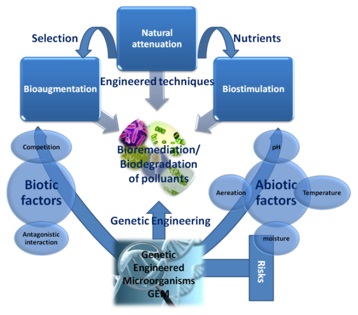
Figure 7-4.4: Diagrammatic representation of biodegradation involving microorganisms and GEM
(Obtained from: http://www.intechopen.com/books/biodegradation-life-of-science/biodegradation-involved-microorganisms-and-genetically-engineered-microorganisms)