The present module details the components of blood plasma (RBC, WBC, and platelets). We will see how these cells are different from other cells which we have studied till now. Further it also describes Haemopoiesis, erythropoiesis and leucopoiesis.
Components of blood plasma cell
The blood plasma is mainly composed of red blood corpuscles (RBC), white blood corpuscles (WBC) and platelets. These cell types are different from most of the cells you have come across.
RBC
The first person to describe red blood cells or erythrocytes was a Dutch biologist Jan Swammerdam, in 1658. Anton van Leeuwenhoek provided further descriptions of the RBCs in 1674. Red blood cells are the most common type of blood cell (about 4-6 millions/mm3). Its role is to deliver oxygen to the body tissues. A typical human mature erythrocyte is 6–8 µm in diameter and 2 µm thick. The RBCs mature in the bone marrow. In humans, mature red blood cells are flexible biconcave disks that lack a cell nucleus and most organelles as mitochondria, Golgi apparatus and endoplasmic reticulum. The shape of the red blood cells become sickle shaped in the disease called sickle-cell anaemia. The mean life of erythrocytes is about 120 days. When they come to the terminal end of their life, they are retained by the spleen where they are phagocyted by macrophages. They take up oxygen in the lungs or gills and release it while squeezing through the body's capillaries. This role is accomplished by haemoglobin which is an iron-containing biomolecule that can bind oxygen and is responsible for the blood's red color. Haemoglobin structure was discovered in 1959 through X-ray crystallography by Dr. Max Perutz who unraveled the structure of hemoglobin. Hemoglobin in the erythrocytes also carries carbon dioxide back from the tissues which is transported back to the pulmonary capillaries of the lungs as bicarbonate dissolved in the blood plasma. Other than hemoglobin, the cell membrane of red blood cells play many roles that regulate surface deformability, flexibility, adhesion to other cells and immune recognition. The red blood cell membrane is composed of 3 layers which are the glycocalyx on the exterior (rich in carbohydrates) and the lipid bilayer which comprising of transmembrane proteins.
WBC
White blood cells (WBCs) or Leukocytes confirm immunity to organisms. The density of the leukocytes in the blood has been reported to be 5000-7000 /mm3. They are of two types namely granulocytes (cytoplasm having granules) and agranulocytes (cytoplasm lacking granules). Further, granulocytes can be distinguished into neutrophil, eosinophil and basophil. The granules in the granulocyte lineage have different affinity towards neutral, acid or basic stains giving the cytoplasm different colors. The agranulocytes are lymphocytes and monocytes. The proportion of each type of leucocyte along with their primary function in blood is listed in Table 1.
Table 1: Proportions of leukocyte present in the blood

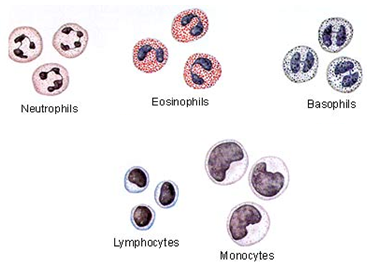
Figure 1: Different types of Leucocytes