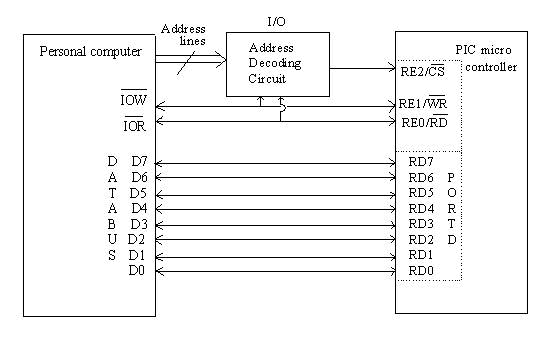
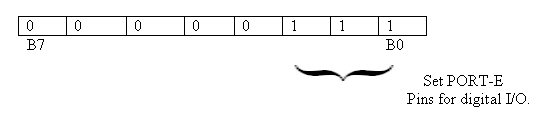
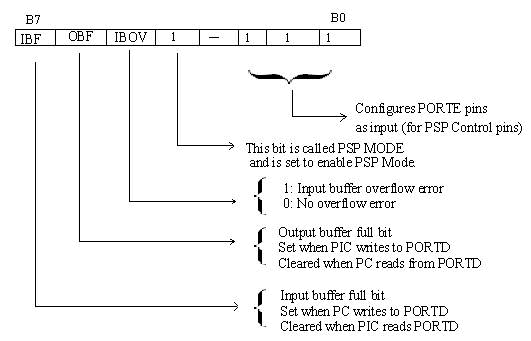
As explained, PSP Mode facilitates bidirectional 8-bit parallel data transfer. After ADCON1<b2-b0> and TRISE<b4, b2-b0> bits are set by the user program, PORTD and PORTE are configured for PSP. When PC wants to write an 8-bit data to PIC, it addresses the PIC microcontroller and the I/O address decoding circuit makes  go low selecting the PIC chip. PC also makes go low selecting the PIC chip. PC also makes  (I/O write) pin low and floats the data through its data bus (b7-b0). The data is written to PORTD and IBF flag in TRISE Register is set indicating that a byte is waiting at PORTD input buffer to be read by the PIC. Simultaneously PSPIF flag bit of PIR1 register is set and an interrupt is generated if PSPIE, PEIE and GIE bits have been set (i.e., the peripheral PSP interrupt is enabled.). After the data is read from PORTD, IBF bit automatically becomes zero; however PSPIF bit has to be cleared by software. If a second byte is written by the PC before the first byte is read, the second byte is lost and the IBOV flag in TRISE register is set indicating this loss. (I/O write) pin low and floats the data through its data bus (b7-b0). The data is written to PORTD and IBF flag in TRISE Register is set indicating that a byte is waiting at PORTD input buffer to be read by the PIC. Simultaneously PSPIF flag bit of PIR1 register is set and an interrupt is generated if PSPIE, PEIE and GIE bits have been set (i.e., the peripheral PSP interrupt is enabled.). After the data is read from PORTD, IBF bit automatically becomes zero; however PSPIF bit has to be cleared by software. If a second byte is written by the PC before the first byte is read, the second byte is lost and the IBOV flag in TRISE register is set indicating this loss. |

 ,
,  and
and