TENSILE TESTING
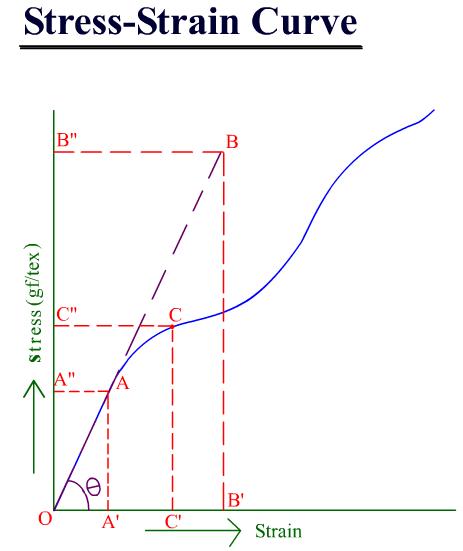
Stress-Strain Curve:
|
||
 |
||
Initial Modulus or Initial Young’s Modulus (within Hook’s region) When an external free is applied it is balanced by internal force developed in the molecular structure of the material
|
||

Secant modulus: |
||||||||||||||||||||||
Slope of the straight line drawn between zero and a specific point (D), i.e. known strain or stress. |
||||||||||||||||||||||
a) OA - Elongation is due to stretching of primary or secondary bonds, totally recoverable, elastic zone. |
||||||||||||||||||||||
| b) By further increasing the stress, the curve bends sharply at ‘C’, where larger strain at smaller stress - ‘Yield point’, OC' - Yield strain,OC" - Yieldstress. | ||||||||||||||||||||||
c) This rearrangement puts the material in a better position to withstand further stress. |
||||||||||||||||||||||
d) The nature of curve varies, depending on the molecular structure of fibre or yarn structure. |
||||||||||||||||||||||
e) Work of rupture: Measure of toughness of material. It is the energy of work required to break in specimen. Area under the load-
Elongation curve (Area of shaded position) (gm. Centimeters) |
||||||||||||||||||||||
|
||||||||||||||||||||||
Because it is proportional to cross section and length. The effective unit will be, g/den or g/tex. Nature of stress – Strain curve of yarn can also be changed by changing the spinning parameters, e.g. spindle speed, traveler weight, T.M., etc. |
||||||||||||||||||||||
| f) Work factor: If the curve follow Hook’s law up to breaking point, then; | ||||||||||||||||||||||
This is work factor.
It describes the nature of curve numerically |
||||||||||||||||||||||
g) Elastic recovery: It is the property of a material by which it tends to recover its original size and shape after deformation. |
||||||||||||||||||||||
|
||||||||||||||||||||||
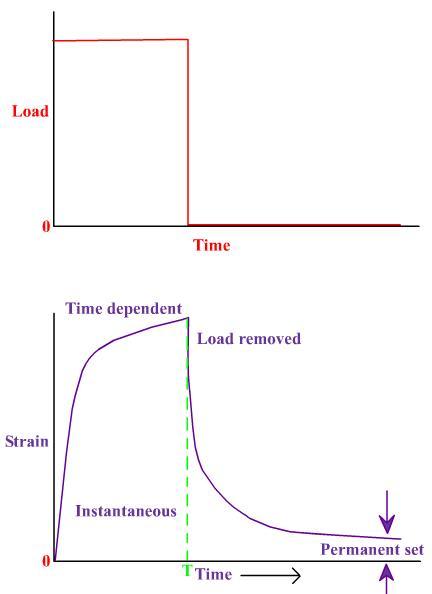
| h) Time dependent effect: | ||||||||||||||||||||||
|
||||||||||||||||||||||
qqqqqqqqqqqqqqqqqqqqqqTime dependent extension or creep |
||||||||||||||||||||||