


Next: About this document ... Up: Module 1. Spinodal decomposition Previous: Solutions to the tutorial
Some sections of this module is based on a Module 3 in Part IV of the NPTEL course, Computational
Methods in Materials Science and Engineering; as shown in that module, even though the accounting
of the curvature of free energy versus composition curve can explain the
phase separation process in terms of concentration changes, the Eq. 4 is not sufficient
to describe the process of spinodal phase separation. This is because when phase separation happens, even
though the system prefers
AA and BB bonds, there are incipient interfaces between the A and B-rich phases which contain AB bonds. Hence
there is an increase in interfacial energy which is not accounted for in the classical picture, and
as noted above, it can be accounted for usign the gradient energy coefficent 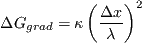 . Including this contribution
of incipient interfaces and deriving the non-classical diffusion equation involves calculus of variations;
the equation, when derived is known as the Cahn-Hilliard equation. In the Computational Methods in Materials Science and
Engineering course module referred to above, the Cahn-Hilliard equation as well as a way of solving it
numerically are shown.
. Including this contribution
of incipient interfaces and deriving the non-classical diffusion equation involves calculus of variations;
the equation, when derived is known as the Cahn-Hilliard equation. In the Computational Methods in Materials Science and
Engineering course module referred to above, the Cahn-Hilliard equation as well as a way of solving it
numerically are shown.