Full annealing (conventional annealing)
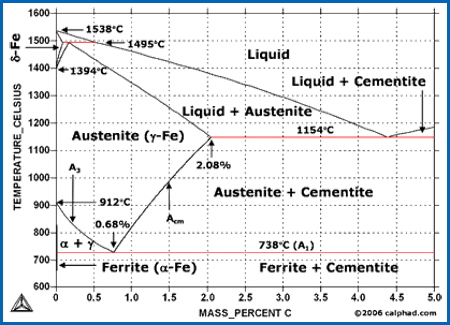
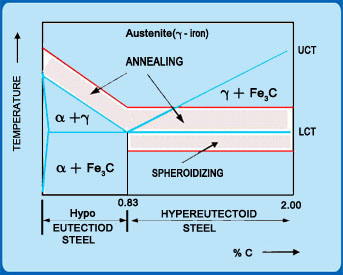
Full annealing process consists of three steps. First step is heating the steel component to above A3 (upper critical temperature for ferrite) temperature for hypoeutectoid steels and above A1 (lower critical temperature) temperature for hypereutectoid steels by 30-500C (Figures 4.7.1 and 4.7.2). In Figure 4.7.2 the terms α, γ and Fe3C refer to ferrite, austenite and cementite phases. The second step is holding the steel component at this temperature for a definite holding (soaking) period of at least 20 minutes per cm of the thick section to assure equalization of temperature throughout the cross-section of the component and complete austenization. Final step is to cool the hot steel component to room temperature slowly in the furnace, which is also called as furnace cooling. The full annealing is used to relieve the internal stresses induced due to cold working, welding, etc, to reduce hardness and increase ductility, to refine the grain structure, to make the material homogenous in respect of chemical composition, to increase uniformity of phase distribution, and to increase machinability. |