Letbe a field. We have seen that the discriminant of a polynomial
vanishes if and only if has a repeated root. Calculation of discriminant
can be difficult. In this section we discuss an effective criterion in
terms of derivatives of polynomials to decide whether certain root of is repeated.
We will also study fields so that no irreducible polynomial in has repeated roots.
Let be a splitting field of a monic polynomial
of degree Write the unique factorization of in .
where
are distinct and
are positive integers.
Definition 9.1 The numbers
are called the
multiplicities of
respectively. If for
some then is called a simple root. If then is
called a multiple root. A polynomial with no multiple
roots is called a separable polynomial.
Proposition 9.2
The numbers of roots and their multiplicities
are independent of a splitting field chosen for over
Proof.
Let and be splitting fields of over Then
there is an isomorphism
. This isomorphism gives
rise
to an isomorphism
Let
be the unique factorization of
. Then
Since is UFD,
are the roots of
with multiplicities
in respectively.
The derivative criterion for multiple roots
Let
. We can define derivative of without appealing
to limits. This is preferable since F may not be equipped with a distance
function.
The derivative of is defined by
.
It is easy to check that the usual formulas for
and
where hold for derivatives of polynomials.


![$ f(x)
\in F[x]$](../../images/algebra4/img194.png) vanishes if and only if
vanishes if and only if  has a repeated root. Calculation of discriminant
can be difficult. In this section we discuss an effective criterion in
terms of derivatives of polynomials to decide whether certain root of
has a repeated root. Calculation of discriminant
can be difficult. In this section we discuss an effective criterion in
terms of derivatives of polynomials to decide whether certain root of ![$ F[x]$](../../images/algebra4/img111.png) has repeated roots.
has repeated roots.
 be a splitting field of a monic polynomia
![$ E[x]$](../../images/algebra4/img1064.png) .
. 
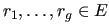

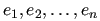


![$\displaystyle \phi_\sigma :E[x] \rightarrow K[x],\;\; \varphi_\sigma
\left(\sum_ia_ix^i\right) = \sum_i\sigma\left(a_i\right)x^i.$](../../images/algebra4/img1215.png)

![$ f(x) \in E[x]$](../../images/algebra4/img1217.png)

![$ K[x]$](../../images/algebra4/img99.png)



![$ f(x)=a_0+a_1x
+\cdots+a_nx^n \in F[x]$](../../images/algebra4/img1222.png)




