Warm and cool contrast:
The contrast is formed by the juxtaposition of hues considered 'warm' or 'cool.' Red-orange and ice-blue make for an intense cold-warm contrast. It is a proven fact that a difference of 5-7 degrees in the subjective feeling of heat and cold is felt when sitting in a room painted in blue-green as compared to one in red-orange Red-orange / blue-green exhibit extreme cold-warm contrast .Each complementary pair has its own peculiarities: (Fig. 142) Yellow/ violet are not only complementary but also an extreme light-dark contrast pair Red/green has the same brilliance (Fig.143).
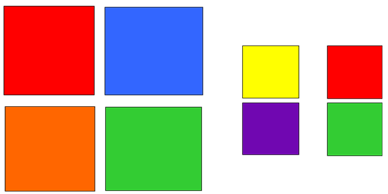
Fig. 142 and 143: Contrast of complements
Contrast of complements:
The contrast is formed by the juxtaposition of perceptual opposites. Two colours are called complementary if on mixing them we get a neutral gray-black. Again, complementaries are a strange pair they are opposites, they incite each other to maximum vividness when adjacent and annihilate to gray- black when mixed.
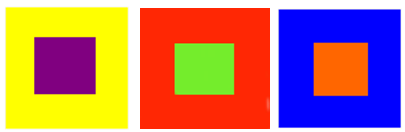
Figure 144 Yellow-Violets, Red-Green, and Orange-Blue
|

