Module 6 : Animation
Lecture 2 : Basic Principles of Animation
 
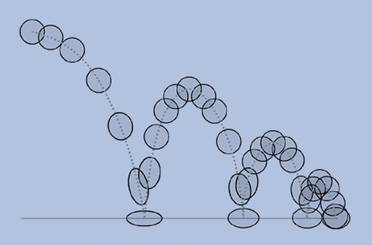
Fig. 6.2.01a

Illustration of the "squash and stretch"-principle.

Of the two balls shown in the figure, the second one animates more realistically.
This is because the first example is a series of mechanically positioned 'in-betweens' that are equally spaced. The second examples recognizes principles in physics that make a ball move faster as it reaches the ground; 'squash' and 'stretch' during the rebound and then slow down as it rises.
The same principle becomes important when animating more complex objects and figures. Extreme exaggeration of stretching and squashing can create dramatic sequences. Animation that seeks to be more realistic needs to keep in mind that the volume of an object remains the same even as it stretches and squashes.

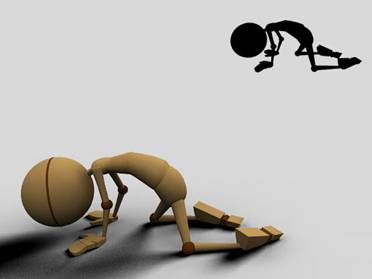
Fig. 6.2.01b

The "Squash and stretch"-principle may be used to make the movements of a crouching figure getting up, look more realistic.

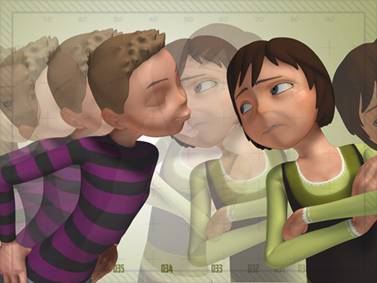
Fig. 6.2.02

The young boy pouting his lips creates the anticipation for a kiss (that may or may not happen!).

Anticipation is a principle that provides a glimpse into a future event and prepares them to 'anticipate' this. A character bending down helps anticipate a leap; a crinkling of the muscles of the nose helps anticipate a sneeze.