Empirical formula
Many empirical equations have been developed for estimation of groundwater recharge. The empirical equation generally relates precipitation with the groundwater recharge. Chaturvedi (1973) proposed the following empirical relation based on the water level fluctuation and rainfall.
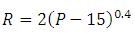
Irrigation Research Institute, Roorkee proposed a modified version of the equation as follows,
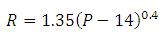
Sehgal in 1973 proposed the following empirical formula for estimation of groundwater recharge.

Where, R and P are the groundwater recharge and precipitation measured in inch. The formula was found to be good for the areas where rainfall is between 60 to 70 cms
Groundwater table fluctuation method
The rise in water table during the rainy season can be used to estimate groundwater recharge due to rainfall. If the rise in groundwater table during the rainfall season is Δh , the groundwater recharge can be estimated as,

Where, R is the groundwater recharge, Sy is the specific yield, P is the groundwater abstraction during rainy season per unit area, Ri is the return flow from irrigation field during rainy season per unit area.
Zero flux plane method
The groundwater recharge can be estimated by equating changes in soil water storage below the zero flux plane to the recharge. The zero flux plane represents the plane where the vertical hydraulic gradient is equal to zero. Between two successive measurements, the rate of change in storage is assumed to be equal to the recharge rate. This method is relatively expensive as it requires soil matric potential measurements to locate the position of the zero flux plane and soil water content measurements for estimating the change in the storage.