PTMs have significant biological functions which are:-
- Aids in proper protein folding − few lectin molecules called calnexin binds to glycosylated proteins and assist in its folding.
- Confers stability to the protein- glycosylation can modify the stability of the protein by increasing protein half life. It protects the protein against cleavage by proteolytic enzyme by blocking the cleavage sites.
- Protein sorting or translocation- If phosphorylated mannose residues are present in the protein it always goes to lysosome.
- It regulates protein activity and function- phosphorylation of protein is a reversible PTM which activates the protein.
- It significantly increases the diversity and complexity in the proteome.
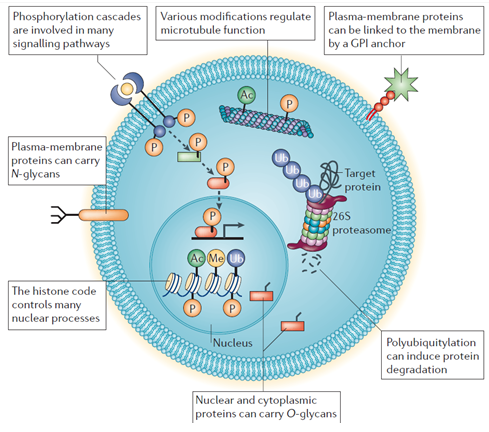
Figure and figure legend Source : Nature Reviews Mol Cell Bio. 7, 2006, 391-403
Figure: Cellular post-translational modifications. This schematic figure shows the location and role of a selection of some of the most important of more than 200 types of post-translational modification (PTM). PTMs are found on all types of protein, from nuclear transcription factors to metabolic enzymes, structural proteins and plasmamembrane receptors. PTMs affect the physicochemical properties of proteins, which provides a mechanism for the dynamic regulation of molecular self-assembly and catalytic processes through the reversible molecular recognition of proteins, nucleic acids, metabolites, carbohydrates and phospholipids. Ac, acetyl group; GPI, glycosylphosphatidylinositol; Me, methyl group; P, phosphoryl group; Ub, ubiquitin (Nature Reviews Molecular Biology, 2006, 7, 391-403)
|

