Other method for irreversible oxidation of disulfide bond is use of preformic acid. As shown in the figure below, performic acid oxidizes cysteine to negatively charge cysteic acid. Repulsion of negatively charged cysteic acid group prevents re-formation of disulfide and alkylation is not required (Fig. 4).
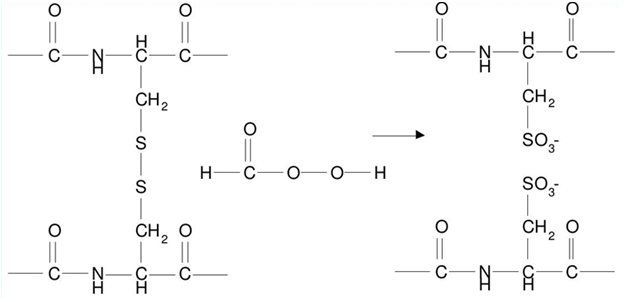
Figure 4: Irreversible oxidation of disulfide bond is use of preformic acid.
Further, the accuracy of each cycle is 98%. So after 60 steps the accuracy is less than 30%. Thus, this method cannot be used for sequencing of proteins larger than 50 amino acids. In case of larger proteins it has to be broken down to short peptide fragments using cleavage proteases such as trypsin (cleaves a protein at carboxyl side of lysine and arginine residues) or chymotrypsin (cleaves at carboxyl side of tyrosine, tryptophan and phenylalanine). Specific cleavage can also be achieved by chemical methods like cynogen bromide, which always cleaves at carboxyl side of methionine residue (a protein with 12 methionine will yield 13 fragment polypeptide on cleavage with cynogen bromide (CNBr).
|

