Module 4 : Interactomics and protein microarrays
Lecture 21 : Interactomics-Techniques to Study Protein-Protein Interactions
 

I. INTERACTOMICS AND ITS SIGNIFICANCE

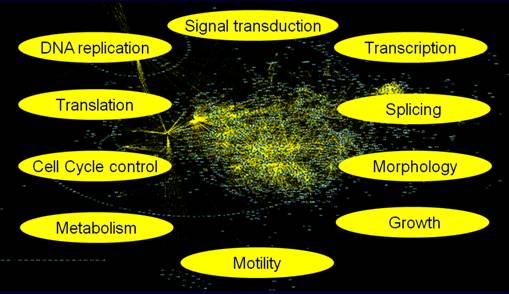
Interactomics is the study of a network of interactions. Interactome consists of all the interactions among biological pathways and the associated molecules. Interactomics utilizes bioinformatics approach along with the experimental data. The necessity for the usage of bioinformatics can be attributed to the immense amount of information obtained for each network – the key players, their upstream/downstream interactors, the type of interaction etc. But in all the interactions the most active players are the proteins – almost all major steps in all the pathways are mediated by proteins in the form of enzymes, hormones, receptors, metabolites etc. (Fig. 1). Therefore, to understand the mechanism of cellular molecular processes, studying the protein-protein interaction becomes most essential.

Fig 1. Protein-protein interactions: the potential cellular processes, which may get affected due to improper protein-protein interactions. There are different ways in which these interactions take place. These interactions can be strong or weak, or they may be transient or permanent and may finally result in formation of homo-oligomers or hetero-oligomers. Any alteration in these interactions could lead to formation of new, incorrect oligomers or render a key factor inactive, or a change in the kinetics of a certain reaction.

Each interactome is highly controlled and tightly regulated. Any imbalance can hamper normal conditions and result in a disease-like state. Thus, studying the protein interactions is important as they interact with a wide variety of biomolecules such as lipids, nucleic acids, small drug inhibitors, etc. Proteins also interact with one another to form macromolecular complexes that regulate signal transduction & gene regulation. Study of these networks could also help in understanding the function of uncharacterized proteins, and also to find out new roles for characterized proteins. Also, new networks of protein interactions can be found out as the same protein may play a role in different pathways. This understanding will further help us to manipulate the networks, thereby opening new avenues to study the diseases.

Content on this page requires a newer version of Adobe Flash Player.

Get Adobe Flash player

Illustration: Interactomics and its significance

Interaction studies of proteins with various biomolecules help in deciphering and understanding the functions of various proteins in the complex network of cellular pathways. Proteins interact with other biomolecules such as nucleic acids, lipids, hormones etc. to perform a multitude of functions in living organisms such as signal transduction, growth & regulation, and metabolism, to mention a few.

Protein interactions with other biomolecules can be of several different types. They may be weak or strong, obligate or non-obligate, transient or permanent. The physical basis for these interactions include electrostatic, hydrophobic, steric interactions, hydrogen bonds etc.